
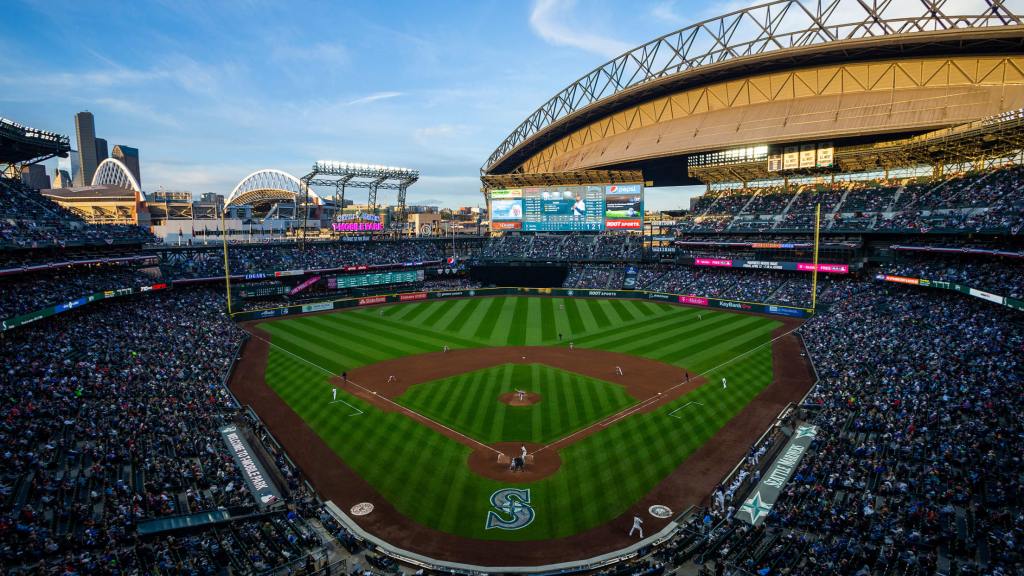
T-Mobile Park in Seattle might look like a baseball paradise from the stands, but to hitters standing at home plate, it can feel more like purgatory. While fans admire the skyline views and retractable roof, players—especially hitters—often find themselves cursing the very ground they play on. T-Mobile Park has gained a reputation as one of the most pitcher-friendly parks in Major League Baseball, and while that might sound great if you’re a Cy Young hopeful, it poses unique challenges not just for the Mariners, but for visiting teams as well.
This isn’t just anecdotal griping—there are quantifiable, consistent factors baked into this stadium that suppress offense, inflate pitcher stats, and ultimately hurt the Mariners more than they help. Let’s dig into the science, the stats, and the slightly absurd quirks of Seattle’s not-so-hitter-friendly home.
The Batter’s Eye: A Visual Challenge Masquerading as Design
The batter’s eye is supposed to help hitters—at T-Mobile, it seems to do the opposite.
Several players have publicly criticized the design of the batter’s eye at T-Mobile Park, claiming it doesn’t provide enough contrast to see the ball clearly. Former Mariners outfielder Teoscar Hernández, for example, struggled immensely at home in 2023. His OPS dropped nearly 200 points compared to his road performance. He openly stated he could never get comfortable at the plate in Seattle, blaming it largely on the visibility issues.
And he’s not alone. Players on opposing teams have voiced similar complaints, which suggests this isn’t just a case of one guy in a slump. When professionals, whose careers depend on split-second pitch recognition, consistently say they can’t see the ball well in one specific park—it’s a red flag. Poor visibility leads to poor timing, more strikeouts, and an all-around offensive black hole.
Climate and the Marine Layer: Cold, Damp, and Deceptively Deadening
It’s not just the batter’s eye—Mother Nature seems to have it out for Seattle’s hitters too.
T-Mobile Park is located near the Puget Sound, which means it’s often blanketed by a cool marine layer that thickens the air and stifles ball flight. The average game-time temperature in Seattle is among the lowest in the league, and colder air is denser, meaning the ball doesn’t carry as far. In fact, hard-hit balls in Seattle travel about five feet less than they would in more temperate cities like Phoenix or Arlington.
That might not sound like much, but five feet can mean the difference between a game-tying home run and a routine fly out. Seattle’s marine layer doesn’t just cool the air—it cools down offense entirely. It’s no coincidence that slugging percentages at T-Mobile Park rank near the bottom of MLB year after year.
Wind Patterns: Seattle’s Invisible Defense
Even when the weather cooperates, the stadium’s design can conspire against offense.
Wind patterns at T-Mobile are unique in that they often generate a consistent tailwind blowing in from the outfield. This sounds nice if you’re in the stands on a hot day, but for hitters, it’s a subtle saboteur. That headwind reduces carry on fly balls and boosts the effectiveness of fastballs and offspeed pitches alike.
Data backs this up: Mariners pitchers posted a 25% swing-and-miss rate at home, compared to 20% on the road. That’s not nothing. It suggests that T-Mobile Park helps even average pitchers look elite, while forcing hitters into a more defensive, less powerful approach.
Statistical Evidence: Seattle’s Offensive Abyss
Now for the cold, hard numbers—because this isn’t just “Seattle is hard to hit in” folklore.
In 2024, the Mariners had one of the league’s worst home offenses:
- 30th in batting average at home
- 29th in slugging percentage
- 28th in total runs scored
On the road? Those numbers jump:
- 22nd in batting average
- 15th in slugging
- 12th in runs scored
That’s a dramatic swing. This means the exact same players, facing roughly the same pitching talent, become markedly better hitters the second they leave their home ballpark. It’s like putting ankle weights on your lineup for 81 games a year.
Park Factors: Where Offense Goes to Die
If you want the TL;DR version: T-Mobile Park is statistically the worst hitters’ park in Major League Baseball.
Park Factor is a metric that compares run scoring at home versus on the road. A Park Factor of 100 is neutral—anything below that favors pitchers. T-Mobile Park consistently posts Park Factors in the 87–91 range, indicating offense is reduced by up to 13%.
But it’s not just runs. T-Mobile suppresses home runs, extra-base hits, and even batting average on balls in play (BABIP), meaning it affects nearly every aspect of offensive production. And because pitchers benefit from inflated stats, it can create misleading narratives—pitchers look better than they are, hitters look worse, and front offices are forced to guess who’s really talented and who’s just T-Mobile’d into irrelevance.
Player Experiences: When the Eye Test Matches the Analytics
The Mariners’ own roster history tells a sobering story.
Take Jesse Winker. In 2021 with the Reds, he had a .949 OPS. The next year in Seattle, it fell off a cliff to .688. Analysts initially blamed a mechanical issue, but his road splits were still decent—it was his home numbers that were catastrophic. Teoscar Hernández experienced a similar drop-off. Even Kyle Seager, a lifelong Mariner, hit significantly better on the road than at home over the course of his career.
This isn’t just a statistical blip—it’s a trend. It’s not that players become bad when they come to Seattle. It’s that Seattle makes good hitters look bad, over and over again.
Roster Strategy: Building a Team to Survive T-Mobile
The Mariners front office is well aware of the park’s limitations—and they’ve been forced to build around it.
Instead of prioritizing home run hitters, they’ve shifted toward contact hitters who can spray line drives and leg out doubles. Defense and pitching have taken center stage, which aligns with the stadium’s strengths. But this kind of team-building comes with a risk: it limits your margin for error. If your team doesn’t pitch well or your contact guys don’t get on base, you’re left with an offense that can’t produce comebacks, rallies, or fireworks.
It’s a bit like trying to win NASCAR with a hybrid engine. You can do it, but you’ll have to drive flawlessly and hope no one else brings a V8.
The Humidor: A Nice Try
In 2022, MLB required all teams to use humidors to store baseballs at consistent moisture levels, aiming to level the playing field. The idea was to reduce disparities between dry environments (like Denver) and humid ones (like Miami or Seattle). But Seattle already had a humidor in place—and it hasn’t helped much.
The issue isn’t just the ball; it’s the combination of cool temperatures, air density, wind, and that pesky batter’s eye. A humidor can only do so much when everything else is working against offense.
Visiting Teams: Welcome to the Pitcher’s Dream (Hitter’s Nightmare)
Seattle doesn’t just frustrate the Mariners—it humbles every lineup that walks through the door.
Visiting hitters consistently see their production drop in Seattle. Home run rates fall. Batting averages sink. Some players have even been benched for a series in Seattle to avoid having their season stats sabotaged. The park is such a known offensive graveyard that fantasy baseball managers take it into account when setting lineups.
It’s a place where no one—not even visiting stars—feels safe at the plate.
Slightly Funny, Completely True: What If Safeco Field Were a Person?
If T-Mobile Park were a person, it would be that smug guy at the gym who corrects everyone else’s form unprompted and still insists he doesn’t use pre-workout. Hitters roll their eyes when they show up. Pitchers grin and crack their knuckles. And fans? They get a lot of 3–2 games where nobody scores until the eighth inning.
It’s less “America’s Pastime” and more “America’s defensive chess match.”
Final Thoughts: Embrace the Weirdness—or Fix It?
So what’s the solution? Do the Mariners change the batter’s eye? Do they reconfigure the dimensions? Or do they keep leaning into the pitching-heavy philosophy and build a team that thrives in low-scoring games?
Whatever the case, T-Mobile Park will continue to be a fascinating outlier. It’s a ballpark that has a clear identity, and while it hurts offense, it does add strategic complexity. Maybe that’s the real appeal—when you win in Seattle, you’ve really earned it.


Leave a comment