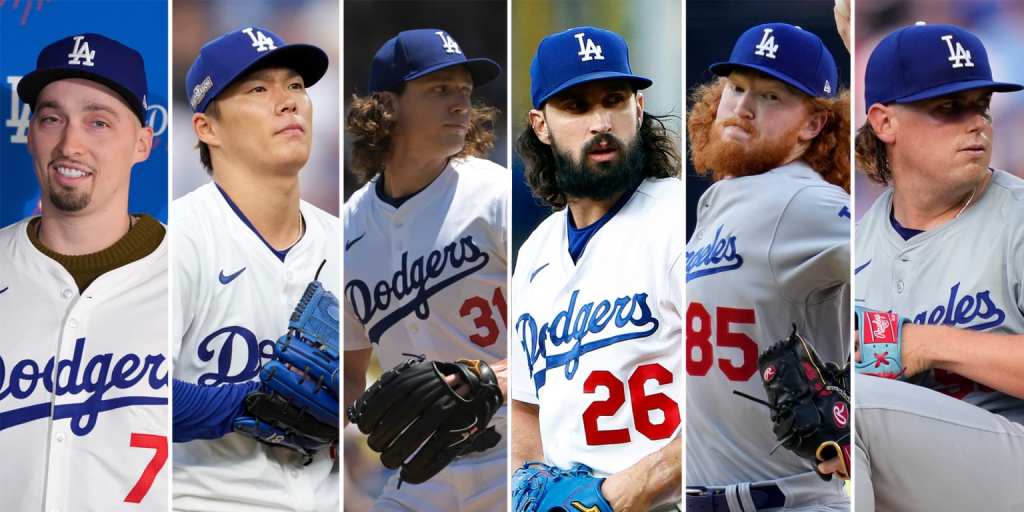
The Los Angeles Dodgers are baseball’s 800-pound gorilla, and plenty of fans aren’t happy about it. With a 2025 payroll north of $320 million, a lineup boasting three MVPs, and a rotation that could double as a pitching lab, they’re the team everyone loves to hate. Critics cry that their spending spree—over $1.5 billion in free-agent contracts since 2023—ruins competitive balance, turning MLB into a rich kid’s sandbox. But here’s the twist: the Dodgers aren’t baseball’s apocalypse. They’re its spark plug. A villain this good forces everyone else to level up, stirs up drama that fills seats, and keeps the game buzzing. Let’s unpack why LA’s juggernaut is exactly what baseball needs, with a few chuckles along the way—because nothing says “villain” like a team that can afford to sign your favorite player and your backup favorite, too.
The Villain Narrative: Why We Need a Darth Vader in Dodger Blue
Every great story needs a bad guy, and in baseball, the Dodgers are happy to don the black cape. Their 2024 World Series title, followed by a scorching 11-6 start in 2025 despite a historic 16-0 home loss to the Cubs, has cemented their status as the team to beat. Posts on X capture the sentiment: fans outside LA grumble about “unfair” spending, with one calling them “the Evil Empire West” (sorry, Yankees, you’ve been dethroned). But this hate isn’t a bug—it’s a feature.
Villains drive engagement. Look at history: the Yankees’ late-1990s dynasty, with 4 titles in 5 years, didn’t kill baseball; it packed stadiums as underdogs like the 2001 Diamondbacks rose to slay them. The Dodgers’ dominance does the same. Their 2025 season-opening sweep over the Cubs in Tokyo drew global eyes, with Shohei Ohtani’s .273/.377/.500 slash line through April 14 stealing headlines. When they roll into town, fans show up—either to cheer or jeer. Per Baseball-Reference, Dodger Stadium led MLB in attendance again in 2024, averaging 47,000 fans per game. Hate-watching is still watching, and that’s gold for a sport fighting streaming wars and short attention spans.
The villain role also fuels rivalries. The Padres, Giants, and now Mets (thanks, Juan Soto’s $765M deal) are gunning for LA’s crown. These matchups aren’t just games—they’re grudge matches. When Mookie Betts homered in Philly on April 6, 2025, the boos were deafening, but the energy was electric. A strong Dodgers team makes every NL West clash feel like October, and that intensity keeps baseball from fading into background noise.
Spending Big, Winning Big: The Competitive Ripple Effect
The Dodgers’ checkbook is MLB’s most lethal weapon, but it’s not a death sentence for competition—it’s a wake-up call. Their $320M payroll in 2025 dwarfs the league average ($160M), yet it forces others to get creative. Tampa Bay’s Rays, with a $90M payroll, made the playoffs 5 straight years (2019-2023) by leaning on analytics and prospects. The 2023 Diamondbacks, spending $120M, toppled LA in the NLDS en route to the World Series. Money buys talent, but brains win games.
LA’s spending sets a bar. Teams can’t coast on mediocrity; they have to innovate. The Dodgers’ signing of Yoshinobu Yamamoto (12 years, $325M) and Roki Sasaki in 2025 pushed clubs like the Orioles to invest in pitching pipelines—Baltimore’s 2024 rotation, led by Grayson Rodriguez (3.45 ERA), shows it’s working. Sasaki’s debut (3 IP, 5 BB, 1 ER) was shaky, but his 100-mph heat has rivals scrambling to scout Japan harder. Per ESPN, MLB teams signed 15 Japanese players in 2024-25, up from 8 in 2020-21. The Dodgers’ moves ripple, raising the talent tide league-wide.
And let’s be real: big spending doesn’t guarantee rings. LA’s 2024 title was their first full-season championship since 1988, despite topping payrolls for a decade. From 2013-2022, they won 10 straight NL West titles but only nabbed one ring (2020, shortened season). The Braves, Phillies, and Astros have all knocked them out since 2018. If anything, LA’s cash makes them a target—every team circles those games, bringing their A-game. Clayton Kershaw, rehabbing for a 2025 return, put it best: “Everyone wants to beat us. It makes every pitch matter.”
Star Power: Ohtani and Co. Are Baseball’s Box Office
The Dodgers don’t just win—they dazzle. Shohei Ohtani, the $700M unicorn, is a walking highlight reel. In 2025, he’s hitting .273 with 4 HRs through 17 games while prepping for a pitching return post-Tommy John. His bullpen sessions, hitting 92 mph by April 13, have fans buzzing about a two-way comeback. Add Betts (2024 NL MVP runner-up), Freddie Freeman (.300 BA career), and Teoscar Hernández (5 HRs in 2025), and LA’s lineup is a popcorn machine.
Stars sell. Ohtani’s Dodgers debut in Tokyo drew 15 million viewers in Japan alone, per MLB.com, boosting baseball’s global reach. His jerseys outsell every player’s, and Dodger Stadium’s gift shops can’t keep them stocked. This isn’t just LA’s gain—MLB’s revenue hit $12B in 2024, partly because Ohtani’s draw brings casual fans who stick around to watch Corbin Burnes or Aaron Judge. The Dodgers’ star power is a rising tide, lifting baseball’s profile when it’s competing with TikTok and NFL RedZone.
But stars also inspire. Kids in Japan are picking up gloves because of Ohtani and Yamamoto. Little Leaguers in LA mimic Betts’ swing. When Freeman homered on April 11 to cap a World Series ring ceremony, social media exploded with clips captioned “That’s why I play.” The Dodgers’ glamour isn’t a gatekeeper—it’s a gateway, pulling new fans and players into the game.
The Underdog’s Dream: Beating Goliath Feels Better
A villain like the Dodgers makes victories sweeter. Ask any Cubs fan about April 12, 2025, when Chicago hung 16 runs on LA for the worst home shutout in franchise history. Pete Crow-Armstrong’s two homers and Ben Brown’s 6 scoreless innings weren’t just a win—they were a statement. Per Yahoo Sports, the Cubs’ 21 hits sparked a week of memes roasting LA’s “unbeatable” aura. That’s the beauty of a Goliath: when they fall, the party’s louder.
History agrees. The 2004 Red Sox’s ALCS comeback against the Yankees’ dynasty wasn’t just a series—it was a cultural earthquake. The 2019 Nationals stunned the 106-win Dodgers in the NLDS, launching their World Series run. These moments don’t happen without a villain to topple. LA’s strength gives smaller markets like Kansas City or Milwaukee a chance to script their own legend. In 2024, the Royals (89 wins, $115M payroll) nearly made the ALCS. If they upset LA in 2025, it’ll be David vs. Goliath on steroids.
This dynamic keeps baseball unpredictable. Despite LA’s 8-0 start in 2025, they’ve since dropped 5 of 9. Injuries—Freeman’s ankle, Hernández’s stomach bug—show they’re mortal. Per The Athletic, their rotation’s walk rate (4.1 BB/9) leads MLB, a crack in the armor. Every team knows they can win if they exploit it, and that hope fuels competition.
The Business Case: Money Talks, and So Do Fans
Baseball’s a business, and the Dodgers are its cash cow. Their $138M luxury tax bill in 2025 redistributes to smaller clubs, per the Los Angeles Times. Teams like the Pirates or Reds could invest it in prospects or facilities, though some owners (looking at you, Pittsburgh) might just pocket it. Still, LA’s spending pumps money into the ecosystem. Their 2024 World Series run generated $50M in local LA revenue—hotels, bars, taco trucks. When they travel, opponent cities cash in, too.
Fan interest spikes with a villain. MLB’s 2024 attendance rose to 29,500 per game, up 578 from 2023, per Bleacher Report. The Dodgers’ road games, especially in rival parks like San Diego, sell out fast. Their April 1-2 series against Atlanta saw Truist Park hit 41,000 fans nightly. Love them or hate them, LA moves the needle. Social media thrives on it—X posts about Ohtani’s every swing get thousands of likes, even if half are from fans praying he strikes out.
And let’s not pretend baseball was “pure” before LA’s splurge. The Yankees spent $200M annually in the 2000s. The 1927 Murderers’ Row squad was a superteam. Big markets have always flexed muscle—it’s just LA’s turn. The difference? They’re doing it with flair, signing global icons like Sasaki while rehabbing legends like Kershaw. It’s less “ruining” and more “redefining.”
The Counterargument: Is It Really That Bad?
Critics argue the Dodgers kill parity. Only 8 teams outside the top 10 markets have won a World Series since 2005, and LA’s spending widens that gap. Small-market fans in Oakland or Pittsburgh feel hopeless when their best players bolt for Dodger blue. It’s a fair gripe—MLB’s lack of a salary cap (unlike the NFL’s $255M hard cap) lets wealth dictate rosters. The A’s, playing in a minor-league park in 2025, can’t dream of signing a $23M outfielder like Hernández.
But parity’s overrated. The NFL’s cap doesn’t stop the Chiefs from three-peating. Baseball’s charm is its chaos—162 games expose flaws no checkbook can hide. The Dodgers’ 2023 NLDS flop (100 wins, swept by Arizona) proves it. And MLB’s expanded playoffs give wild cards like the 2024 Guardians (92 wins) a shot. LA’s dominance doesn’t lock the door—it just makes the key harder to find, and that hunt keeps the game alive.
Plus, the “ruining baseball” narrative ignores execution. LA’s front office, led by Andrew Friedman, doesn’t just spend—they strategize. Their 2024 draft class ranked top-5, per Baseball America, and their minors churn out arms like Bobby Miller (2.33 ERA in AAA, 2025). Money helps, but smarts seal the deal. Other teams can copy that blueprint without a billion bucks.
The Intangibles: Drama, Swagger, and October Stakes
The Dodgers bring theater. Ohtani’s rehab saga—30 pitches at 92 mph by April 13—reads like a Hollywood script. Betts’ recovery from a 20-pound illness to homer against Philly is pure grit. Even their flops, like Sasaki’s 5-walk debut, spark debate. This team doesn’t just play—they perform, and baseball thrives on stories.
Their swagger irks opponents, and that’s perfect. When Hernández celebrates a homer with a dugout dance, it’s a taunt. Rivals respond—Crow-Armstrong’s April 12 dinger came with a stare that said, “Not today, LA.” This back-and-forth is baseball’s pulse. Without a villain to poke, the game risks becoming a polite chess match, and nobody’s buying tickets for that.
October is where it crystallizes. The Dodgers’ 2024 postseason run—Freeman’s clutch hits, Yamamoto’s 6 scoreless innings vs. the Yankees—made every game must-see TV. A strong LA raises the stakes. Teams know they can’t sleepwalk to a ring; they need a plan to dethrone the kings. That pressure forged the 2017 Astros, 2019 Nats, and 2021 Braves. The Dodgers’ shadow makes champions sharper.
Why I Love the Villain
I’ll admit it: I relish the Dodgers as baseball’s big bad wolf. Growing up, I cheered against the Yankees’ pinstriped machine, but when the Red Sox broke their curse in 2004, it felt like toppling a titan. LA’s that titan now. Beating them in 2025 would be sweeter than a walk-off grand slam. It’s not about hating them—it’s about what they bring out in everyone else. The Cubs’ 16-0 rout wasn’t just a score; it was proof anyone can punch up.
The Dodgers don’t ruin baseball—they ignite it. Their cash, stars, and swagger force teams to innovate, fans to care, and games to matter. They’re the villain we need, not the one we deserve, to borrow a line from a certain caped crusader. So let LA keep signing megastars. Let them chase 117 wins (they won’t—nobody has). Every time they step on the field, they’re daring the league to be better. And when someone finally topples them—maybe the upstart Orioles or plucky Padres—it’ll be a story for the ages. That’s baseball, and the Dodgers make it damn fun to watch.


Leave a comment