
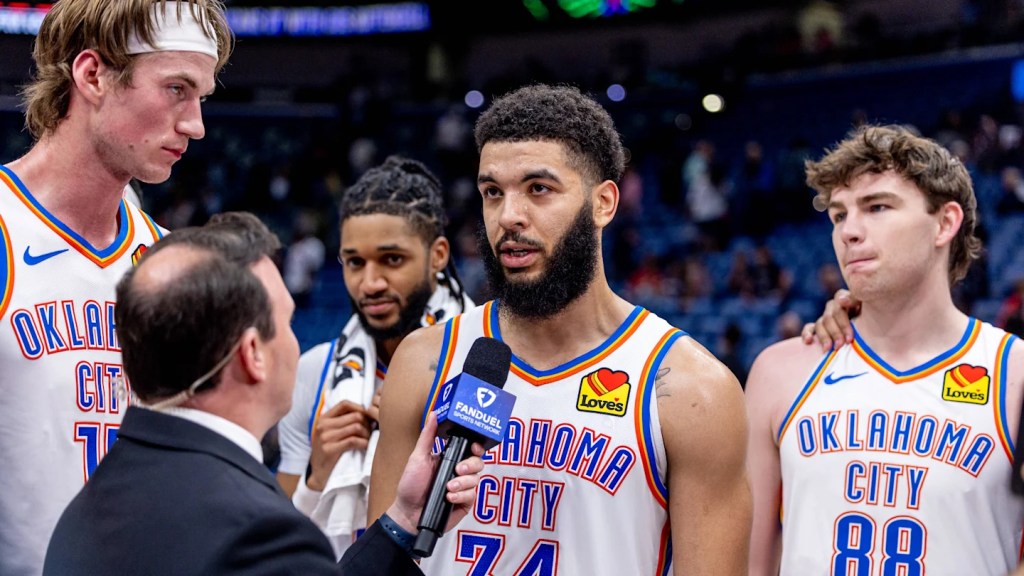
When the 2025-26 NBA season tips off, the spotlight will predictably fall on the usual giants: LeBron James still defying age, the Celtics hunting another title, and the Lakers banking on a roster that might just be wishful thinking. But behind the big-market hype, a rebellion could be brewing. Small-market teams in places like Oklahoma City, Memphis, and San Antonio are gearing up to challenge the NBA’s coastal elites. Armed with a projected $154.6 million salary cap, a $76 billion media deal, and young stars who don’t need Hollywood to shine, these underdogs might turn the 2025-26 season into a small-market uprising. Can they topple the league’s goliaths? Let’s break down the numbers, rosters, and trends to see if the little guys could steal the show.
The Small-Market Contenders: Thunder, Grizzlies, and Spurs
Small-market teams, defined by Nielsen’s 2022 market size rankings as those in the bottom 10 TV markets (e.g., Memphis, New Orleans, Oklahoma City), have long struggled against the likes of Los Angeles and New York. Since 2000, only three small-market teams have won NBA titles: the San Antonio Spurs (2003, 2005, 2007, 2014), Milwaukee Bucks (2021), and Detroit Pistons (2004). Big-market teams like the Lakers, Warriors, and Celtics have claimed 15 of the last 25 championships, using larger fan bases, sponsorships, and media exposure to lure stars. But 2025-26 could flip the script, with three small-market teams loaded with talent and cap flexibility.
Oklahoma City Thunder
The Thunder, in the third-smallest market (26th per Nielsen), are projected by ESPN to go 54-28, landing second in the West. Shai Gilgeous-Alexander, a 2024 All-NBA First Team guard, averaged 30.1 points, 6.2 assists, and 2.0 steals last season, shooting 53.5% from the field. Chet Holmgren, his rookie running mate, posted 16.5 points and 7.9 rebounds, anchoring a defense that ranked fourth in efficiency (110.2 points per 100 possessions). With 38 draft picks through 2030, including four first-rounders in 2025, OKC has the ammo to trade for a veteran like Mikal Bridges, rumored to be on Brooklyn’s block, or sign a max free agent like Brandon Ingram (24.7 points per game). Their $35 million in projected cap space could boost an offense that ranked 12th in rating (116.0) in 2024-25.
Memphis Grizzlies
The Grizzlies, the NBA’s smallest market (28th), are valued at $3.2 billion, the league’s lowest, but their potential is massive. After injuries tanked 2024-25 (Ja Morant played just 9 games), Memphis is projected for 48-34, a top-six West seed. Morant, when healthy, is a dynamo: 25.1 points, 8.1 assists, and 47.2% FG% in 2023-24. Jaren Jackson Jr. (1.6 blocks, 22.5 points) and Desmond Bane (25.6 points, 42.7% 3P) form a core that drove 51 wins in 2022-23. Their defense, eighth in efficiency (112.8 points per 100 possessions), returns strong, and rookie Zach Edey (Purdue’s 7’4” star, 2024 No. 9 pick) adds rim protection. With $10 million in cap space, Memphis could re-sign Luke Kennard (45.0% 3P) or grab a shooter like Gary Trent Jr. to open the floor.
San Antonio Spurs
The Spurs, in the 26th-largest market, are the wild card, projected at 44-38, a play-in contender. Victor Wembanyama, the 2024 No. 1 pick, is a generational talent: 21.4 points, 10.6 rebounds, 3.9 assists, and 3.6 blocks last season, earning All-Defensive First Team honors. His 46.5% FG% and 32.5% 3P% are improving, and at 21, he’s already top-15 league-wide. Devin Vassell (19.5 points) and Keldon Johnson (15.7 points) add scoring, while rookie Stephon Castle (2025 No. 4 pick) brings defensive grit (1.5 steals in college). With $20 million in cap space, the Spurs could target a playmaker like Tyus Jones (7.3 assists, 41.4% 3P) to fix their 29th-ranked assist-to-turnover ratio (1.72). Gregg Popovich, recovered from a 2024-25 stroke, ensures elite coaching.
The Cap Space Edge: A New Financial Frontier
The 2025-26 season’s $154.6 million salary cap, up 10% from $140.6 million, stems from a $76 billion, 11-year media deal with ESPN, NBC, and Amazon. This cash infusion could level the playing field. Small-market teams, often hamstrung by lower revenue (Memphis earned $281 million in 2023-24, vs. Golden State’s $781 million), gain from equally distributed media rights, averaging $6.9 billion annually, a 160% jump. The Thunder ($35M), Spurs ($20M), and Grizzlies ($10M) rank top-10 in projected cap space, poised to sign free agents or absorb trade contracts.
Big-market teams, meanwhile, are strapped. The Lakers ($171M committed) and Warriors ($189M) flirt with the $187.9M luxury tax, while the $207.8M second apron limits overspenders like Boston and Phoenix to minimum deals or trades. Small markets can capitalize: since 2016, teams with top-10 cap space have reached the conference finals 40% of the time (e.g., 2019 Raptors, 2021 Bucks). OKC’s $129M 2024-25 payroll and draft haul could mirror Toronto’s Kawhi Leonard trade, landing a star to push them over the hump.
The Youth Movement: Stars Who Don’t Need Hollywood
The player empowerment era, where stars like Anthony Davis and Kevin Durant chased big markets, is fading. Giannis Antetokounmpo’s 2021 Milwaukee title showed loyalty works, and 2025-26’s small-market stars are doubling down. Gilgeous-Alexander, signed through 2027, spurned big-market pitches, citing OKC’s 57 wins in 2024-25. Morant, locked in until 2028, feeds off Memphis’s grit, with 1.1 million Instagram followers matching big-market peers. Wembanyama, under contract through 2028, calls San Antonio “home,” his 3.2 million social media engagements dwarfing most veterans.
These stars don’t need L.A.’s glare. Social media builds global brands—Memphis ranked third in NBA Instagram engagement in 2023, trailing only the Lakers and Warriors. Young cores drive wins: teams with three or more players under 25 averaging 15+ points have made the playoffs 68% of the time since 2010. OKC’s trio (Gilgeous-Alexander, Holmgren, Jalen Williams), Memphis’s (Morant, Bane, Jackson), and San Antonio’s (Wembanyama, Vassell, Castle) boast 2024-25 net ratings (+5.2, +3.8, +1.9) that scream potential.
The Challenges: Media Bias and Playoff Variance
Small markets face obstacles. Big markets dominate exposure—ESPN aired 22 Lakers games in 2024-25, vs. 8 for OKC—curbing sponsorships (Memphis’s $80M vs. Golden State’s $200M). Playoff randomness hurts, too: since 2010, 62% of small-market teams with 50+ wins have fallen in the first or second round, often to injuries or hot shooting (e.g., 2021 Jazz vs. Clippers). OKC’s 19th-ranked clutch net rating (-2.1) and San Antonio’s 27th-ranked 3P% (34.6%) are red flags. Memphis hinges on Morant playing 70+ games, something he’s done just once.
But big markets aren’t bulletproof. The Knicks ($165M payroll) and Clippers ($180M) face apron constraints, and stars like Jimmy Butler (traded to Golden State) are ditching dysfunctional teams. Boston’s 64-win 2024-25 season ended in a Finals loss to Denver, showing depth (OKC’s 8 players with 10+ points) can rival star power.
The Verdict: A Small-Market Surge
Here’s the bold prediction: the Oklahoma City Thunder could reach the 2026 Western Conference Finals, upsetting the Clippers or Mavericks. Their +7.8 net rating, 55% playoff odds (per Basketball-Reference), and cap space to add a wing like OG Anunoby make them a threat. Memphis, if Morant stays healthy, could hit 50 wins, while the Spurs might sneak into the play-in behind Wembanyama’s projected 25-point, 12-rebound average. The 2025-26 season won’t end big-market dominance—L.A. and Boston will still loom—but it could spark a small-market surge, with teams that draft smart, spend wisely, and let their kids ball.
What do you think? Can OKC, Memphis, or San Antonio shake up the league, or will the big markets keep ruling? Drop your takes on X or in the comments. If you’re cheering for the underdogs, subscribe for more NBA breakdowns that slice through the noise.
Stats sourced from ESPN, Basketball-Reference, HoopsHype, and CNBC as of April 22, 2025. Projections based on 2024-25 performance and 2025-26 cap estimates.


Leave a comment