
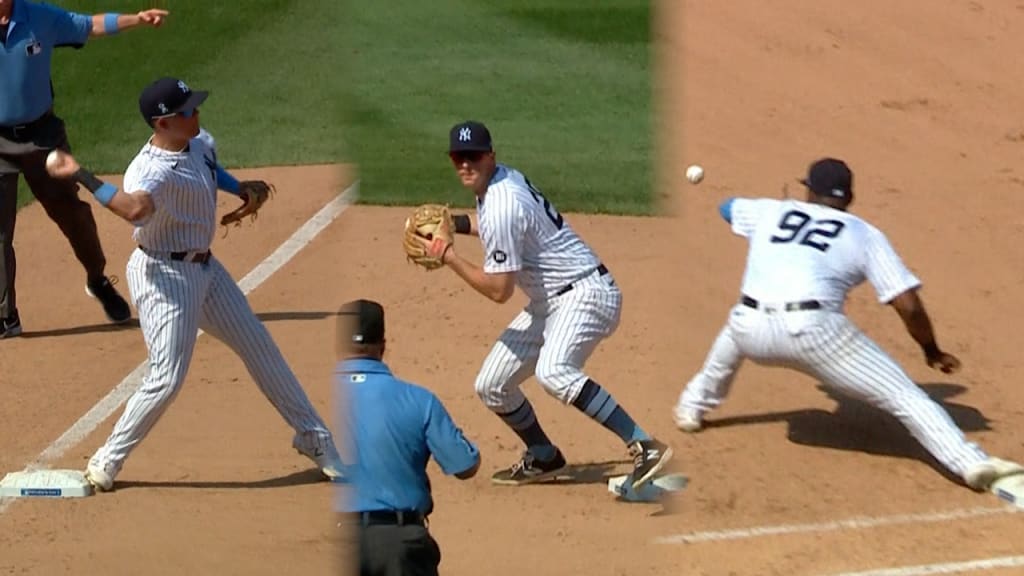
In the intricate tapestry of baseball, few plays captivate the imagination quite like the triple play. This rare defensive feat, where three outs are recorded in a single continuous play, is a testament to split-second decision-making, flawless execution, and often, a touch of serendipity. While double plays are a common occurrence in Major League Baseball (MLB), triple plays remain an elusive gem, averaging only about five per season across the league’s long history. Their scarcity, combined with the sheer athleticism and coordination required, elevates the triple play to a near-mythical status in the sport.
Understanding the Triple Play
A triple play, abbreviated as TP in baseball statistics, occurs when the defense records three outs in one continuous sequence without interruption. For such a play to unfold, a precise alignment of circumstances must converge:
- Base Runners and Outs: There must be at least two baserunners on base with no outs, creating the potential for three outs in quick succession. Statistical analysis from 2011 to 2013 reveals that only 1.51% of at-bats occurred in such scenarios, underscoring the rarity of the setup itself.
- Ball in Play: The batter must hit the ball in a way that allows the defense to capitalize on the situation. This typically involves sharply hit ground balls or low line drives that can be fielded quickly and relayed to multiple bases or used to tag runners.
The complexity of these conditions means that triple plays are not only rare but also highly situational, requiring both opportunity and exceptional defensive prowess.
Historical Context and Evolution
Since the inception of MLB in 1876, there have been 739 recorded triple plays, averaging just over five per season across nearly 150 years of play. While the frequency of triple plays has remained relatively stable, their nature and execution have evolved with the game.
Early Baseball and Triple Plays
In the early days of baseball, triple plays were slightly more frequent due to larger playing fields, less advanced glove technology, and different strategic approaches. However, as the game modernized, defensive alignments and player athleticism began to shape the types of triple plays seen. For example, the “around-the-horn” triple play, involving the third baseman, second baseman, and first baseman (scored as 5-4-3), has become more prevalent in recent decades. Between 1920 and 1965, only 11 such triple plays were recorded, but since 2000, there have been 36, with 21 occurring in the 2010s alone. This shift reflects improvements in infielder range and coordination, as well as changes in hitting tendencies that favor ground balls to the left side of the infield.
Impact of Modern Strategies
Modern baseball’s emphasis on defensive shifts and analytics has also influenced triple play dynamics. Infielders are now positioned more precisely based on batter tendencies, increasing the likelihood of fielding sharply hit balls in triple play scenarios. Additionally, advancements in player training and reaction times have made it possible to execute these plays with greater consistency when the opportunity arises.
Common Scenarios and Statistical Insights
Typical Situations
The most common setup for a triple play involves runners on first and second base with no outs. In this scenario, a sharply hit ground ball to the third baseman can initiate a rapid sequence: the fielder steps on third base to force out the runner from second, throws to second base to force out the runner from first, and then relays to first base to retire the batter. This 5-4-3 triple play is among the most iconic and frequently seen variations due to its reliance on infield coordination.
Other scenarios include line drives caught by infielders, who then double off runners straying too far from their bases, followed by a tag or throw to complete the third out. These plays often hinge on the element of surprise, catching baserunners off guard.
Positional Involvement
Analyzing the positions involved in triple plays reveals distinct patterns:
- First Basemen: Participate in nearly 82% of triple plays, as they are often the final link in the chain, receiving throws to retire the batter.
- Second Basemen: Involved in 64.4% of triple plays, frequently fielding ground balls or covering second base for force outs.
- Shortstops: Participate in 59.7% of triple plays, leveraging their range and arm strength to initiate or complete plays.
- Third Basemen: Involved in 41.6% of triple plays, often starting the 5-4-3 sequence with a ground ball fielded near the bag.
- Outfielders: Rarely involved, with only 10.8% of triple plays including an outfielder, typically in cases where a fly ball leads to runners being doubled or tripled off.
The dominance of infielders reflects their proximity to the bases and the speed required to execute multiple outs in a single play. Outfielders, by contrast, are less frequently involved due to the distance and time required to relay throws.
Statistical Rarity
The rarity of triple plays is further highlighted by their frequency relative to other baseball events. For context, double plays occur in approximately 10-15% of games, while triple plays occur in fewer than 0.1% of games. This stark contrast underscores the unique combination of chance and skill that defines the triple play.
Notable Triple Plays in MLB History
The 8-3-5 Triple Play (2023)
On July 25, 2023, the Atlanta Braves executed a remarkable 8-3-5 triple play against the Boston Red Sox, the first of its kind since 1884. Center fielder Michael Harris caught a shallow fly ball in center field, threw to first baseman Matt Olson to double off a runner who had strayed too far, and Olson then relayed to third baseman Austin Riley to tag out another runner attempting to advance. The precision and speed of this play, combined with its historical rarity, made it a standout moment in the 2023 season.
The 1-3-5 Triple Play (2024)
On June 25, 2024, the Philadelphia Phillies turned a 1-3-5 triple play against the Detroit Tigers, the first such play since 1929. Pitcher Aaron Nola caught a soft line drive, threw to first baseman Bryce Harper to double off the runner, and Harper then fired to third baseman Alec Bohm to tag out a runner caught off base. This play exemplified the quick thinking and athleticism required to seize a fleeting opportunity.
The Unassisted Triple Play
Among the rarest of all baseball feats is the unassisted triple play, where a single fielder records all three outs without assistance. Only 15 such plays have been recorded in MLB history, with the most recent occurring on May 9, 2009, by Philadelphia Phillies shortstop Eric Bruntlett. Typically, these plays involve a middle infielder—usually a second baseman or shortstop—catching a line drive, stepping on second base to double off a runner, and then tagging a runner retreating from third. The unassisted triple play is the ultimate display of individual brilliance, requiring not only athletic ability but also acute game awareness.
Other Memorable Moments
- 1909 World Series: The Pittsburgh Pirates turned a triple play against the Detroit Tigers in Game 2, a rare postseason occurrence that helped secure their championship victory.
- 1973: The California Angels executed a triple play against the Baltimore Orioles, notable for its involvement of outfielder Ken Berry, who initiated the play with a diving catch.
- 2016: The Chicago White Sox turned a triple play against the Texas Rangers, a 9-3-2 sequence that ended with a rare out at home plate, showcasing the versatility of triple play formations.
Strategic and Cultural Significance
Defensive Strategy
Triple plays are not only a product of opportunity but also a reflection of defensive preparation. Teams that excel at turning triple plays often emphasize infield communication and practice rapid relay throws. The rise of the 5-4-3 triple play, for instance, correlates with improved infield glove work and faster double-play pivots, skills honed through rigorous training.
Cultural Impact
In baseball’s rich lore, triple plays hold a special place. They are moments of high drama that can shift the momentum of a game or even a season. Fans and analysts alike recount these plays with reverence, and they often become defining highlights in a team’s history. The rarity of triple plays also makes them a point of pride for players, who may go entire careers without participating in one.
Challenges and Controversies
While triple plays are celebrated, they are not without challenges. Umpires must make split-second calls to determine whether runners were out or safe, often under intense scrutiny. The introduction of instant replay in MLB has helped clarify close calls, but controversies still arise, particularly in cases where the timing of tags or force outs is ambiguous.
Additionally, some argue that the modern game’s emphasis on home runs and strikeouts has reduced the frequency of balls in play, potentially limiting opportunities for triple plays. However, the data suggests that triple plays have maintained a consistent rate, thanks to the increased athleticism and defensive alignments that counterbalance these trends.
In Summary
The triple play remains one of baseball’s most thrilling and rare defensive achievements. Its occurrence is a delicate balance of opportunity, quick thinking, and flawless execution, making it a microcosm of the sport’s complexity and beauty. As baseball continues to evolve with new strategies, technologies, and player dynamics, the triple play endures as a timeless testament to the game’s capacity for surprise and excitement. Whether it’s a historic 8-3-5 sequence or a lightning-fast unassisted play, the triple play will always hold a cherished place in the hearts of players, fans, and historians alike.



Leave a comment