
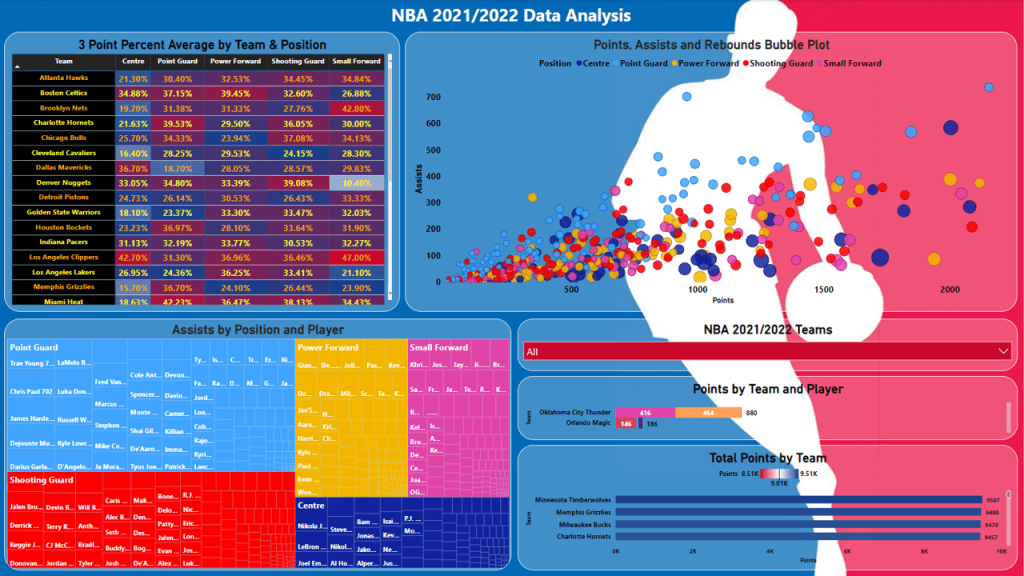
Ever stared at an NBA box score and felt like you were deciphering a cryptic scroll? Points and rebounds? Got it. But plus/minus, PER, and true shooting percentage? That’s a whole new ballgame. Welcome to thephantomcall.com, where we’re turning you into a box score wizard faster than you can say “LeBron triple-double.” Whether you’re a casual fan or dreaming of a gig as an ESPN analyst, mastering how to analyze NBA box scores will elevate your hoops IQ to All-Star levels. Let’s break down the numbers with a dash of wit, a sprinkle of history, and zero fluff—because nobody’s got time for stat-sheet confusion.
Box scores, the NBA’s stat-packed report cards, have been around since the league tipped off in 1946. They’ve evolved from basic tallies of points and fouls to treasure troves of data, thanks to analytics pioneers like John Hollinger. According to Basketball-Reference, over 1.2 million box scores have been logged in NBA history, each telling a story of triumphs, flops, and unsung heroes. Ready to read basketball’s fine print like a pro? Grab your virtual magnifying glass, and let’s dive in.
Why Box Scores Are Your Secret Weapon
Before we decode the numbers, let’s talk about why box scores matter. They’re not just data—they’re the DNA of every NBA game. A single box score can reveal who carried the team, who tanked, and who quietly changed the game’s flow. For example, in Game 6 of the 1998 Finals, Michael Jordan’s 45 points, 4 steals, and +7 plus/minus showed he was the Bulls’ heart and soul, clinching their sixth title. Coaches use box scores to tweak strategies, analysts use them to predict MVPs, and fans use them to settle “who’s better” debates at the bar.
Per NBA.com, teams track over 50 metrics per game, from basic stats to advanced analytics. By learning to analyze box scores, you’ll spot patterns—like why the 2023 Denver Nuggets’ bench outscored opponents by 10 points per game en route to a championship. This guide will walk you through five steps to read, understand, and flex your box score knowledge, plus tools and pitfalls to avoid. Let’s get started.
Step 1: Nail the Basic Stats
Every box score starts with the classics—the stats even your grandma could love. These are the foundation of basketball analysis, tracked since the NBA’s early days. Here’s the rundown:
- Points (PTS): Total points scored. Wilt Chamberlain’s 100-point game in 1962 remains the gold standard, a box score flex that’ll probably never be topped.
- Rebounds (REB): Boards grabbed, split into offensive (OREB) and defensive (DREB). Dennis Rodman’s 18.7 rebounds per game in 1992 proved hustle trumps height.
- Assists (AST): Passes leading to a score. John Stockton’s 15,806 career assists (1984–2003) make him the NBA’s Santa Claus of dimes.
- Steals (STL) and Blocks (BLK): Defensive plays. Hakeem Olajuwon’s 10 blocks in a 1990 game turned the paint into a no-fly zone.
- Turnovers (TO): Ball-handling blunders. Even MVPs mess up—Kevin Durant averaged 3.5 turnovers in 2017, despite his Finals heroics.
- Minutes Played (MIN): Time on the court. In 2023, Jayson Tatum averaged 36.7 minutes, basically living in sneakers.
Start here to get the game’s vibe. For instance, in a 2020 Lakers-Clippers matchup, Anthony Davis’ box score (34 PTS, 8 REB, 4 AST, 2 BLK, 35 MIN) screamed “dominant big man.” Pro tip: Compare starters’ minutes to spot who’s carrying the load—40+ minutes often means a star was in clutch mode.
Bonus: Fouls and Free Throws
Don’t sleep on personal fouls (PF) and free-throw attempts (FTA). A player with 5 fouls (e.g., Shaq in 2000, fouling out 12 times) was likely battling hard or getting outsmarted. Free-throw makes vs. attempts (e.g., 8-10 FT) show clutch performance—unless you’re Shaq, whose 52.7% career FT% was a meme before memes.
Step 2: Crack the Shooting Code
Scoring is great, but efficiency is king. A 30-point night on 30 shots isn’t impressing anyone (sorry, 2017 Russell Westbrook). Shooting stats tell you how players earned their points, and they’re critical for analyzing box scores like a pro.
- Field Goals (FG): Shots made vs. attempted (e.g., 12-20 = 60% shooting). Larry Bird’s 52.7% FG in 1987 was sniper-level for a forward.
- Three-Pointers (3P): Threes made vs. attempted. Stephen Curry’s 402 three-pointers in 2016 (5.1 per game) rewrote basketball’s script.
- Free Throws (FT): Freebies made vs. attempted. Dirk Nowitzki’s 87.9% FT in 2011 carried Dallas to a title.
- True Shooting Percentage (TS%): Combines FG, 3P, and FT for a holistic efficiency score, accounting for shot value. Per NBA.com, Nikola Jokic’s 66.1% TS% in 2023 led all starters, thanks to his midrange mastery.
Aim for TS% above 60%—that’s elite. In Game 1 of the 2018 Finals, LeBron James went 19-32 FG (59.4%) with a 65.2% TS%, proving you can dominate without chucking. Low TS% (e.g., below 50%) often flags inefficiency, like Westbrook’s 47.6% TS% in a 2017 triple-double binge.
Pro Move: Shot Distribution
Check where shots came from using NBA.com’s play-by-play data. If Damian Lillard’s 10-15 FG in a 2023 game includes 8-10 from three, he was raining fire. If a center like Joel Embiid has 0-3 3P but 12-15 FG, he’s owning the paint.
Step 3: Conquer Advanced Metrics
Now we’re entering the nerd zone, where advanced stats make you sound like you’ve got a PhD in Hoopology. These metrics, popularized in the 2000s, quantify impact beyond points and rebounds. Here’s the VIP list:
- Plus/Minus (+/-): Point differential when a player is on the court. Draymond Green’s +13.2 per game in 2017 showed his defensive genius, even with 10.2 PPG.
- Player Efficiency Rating (PER): John Hollinger’s all-in-one stat, adjusted for pace. Michael Jordan’s 31.7 PER in 1988 is a benchmark; 15 is average, 25 is All-NBA. Luka Doncic hit 28.7 in 2023.
- Usage Rate (USG%): Percentage of team plays a player uses (shots, assists, turnovers). James Harden’s 40.5% USG% in 2019 meant he was the Rockets’ entire offense.
- Box Plus/Minus (BPM): Per-minute impact on team performance. LeBron’s 9.1 BPM in 2009 meant he boosted Cleveland by 9 points per 100 possessions.
- Win Shares (WS): Contribution to team wins. Kareem Abdul-Jabbar’s 17.0 WS in 1972 was historic; 10+ is star-level.
In a 2023 Celtics-Sixers game, Jayson Tatum’s +18 plus/minus, 26.8 PER, and 7.2 BPM showed he was Boston’s X-factor, even with “only” 29 points. Advanced stats reveal hidden gems—don’t skip ‘em.
Deep Dive: Contextualizing Advanced Stats
PER and BPM shine brightest over a season. For example, Kevin Durant’s 26.0 PER in 2014 signaled MVP form, but a single-game PER of 20 might just mean a solid night. Plus/minus can be noisy in small samples—Draymond’s +20 in one game doesn’t mean he’s better than LeBron’s +5. Cross-check with minutes and opponent strength (e.g., via Basketball-Reference’s game logs).
Step 4: Track Trends Like a Scout
One box score is a Polaroid; a season’s worth is a blockbuster. Analyzing trends across games reveals consistency, breakouts, or slumps. Here’s how to do it:
- Consistency: Karl Malone’s 25.7 PPG on 51.6% FG over 82 games in 1996 was a masterclass in reliability.
- Breakouts: Shai Gilgeous-Alexander’s PER jumped from 19.4 (2022) to 24.5 (2023), signaling his ascent to stardom.
- Slumps: Kobe Bryant’s TS% dipped to 52.3% in 2011 during a rough stretch, showing even legends wobble.
- Team Trends: The 2021 Bucks averaged 26.7 assists and 13.2 turnovers per game, a sign of crisp ball movement.
Use Basketball-Reference’s season summaries to compare players. For instance, Giannis Antetokounmpo’s 29.5 PPG, 13.6 REB, and 5.6 AST in 2020 showed he was a two-way monster. Look at game logs to spot hot streaks—did Ja Morant’s 3P% climb from 30% to 40% over a month? That’s a story.
Advanced Trick: Opponent Adjustments
Check opponent stats on NBA.com. If a player drops 40 points against the 2023 Spurs (29th in defensive rating), it’s less impressive than 30 against the Celtics (2nd). This context sharpens your analysis.
Step 5: Dodge Common Box Score Traps
Even pros misread box scores. Avoid these pitfalls to keep your analysis tight:
- Chasing Big Numbers: A 50-point game on 40 shots (e.g., Westbrook’s 2017 triple-doubles) might hide a 45% TS%. Efficiency matters.
- Ignoring Context: Garbage-time stats inflate numbers. In a 2020 Clippers blowout, bench players like Landry Shamet padded stats in meaningless minutes.
- Overrating Plus/Minus: A +10 in a single game can be luck. Draymond’s season-long +13.2 (2017) is more telling.
- Forgetting Team Play: A low-scoring player like Ben Simmons (7.2 PPG, 2021) can still shine with 8.0 APG and elite defense.
Always cross-check stats with game flow. If a player’s +15 plus/minus comes in a 30-point rout, it’s less impactful. Watch highlights or read recaps on ESPN to confirm what the numbers suggest.
Tools to Supercharge Your Analysis
No need to scribble stats on a napkin. These free tools make box score analysis a slam dunk:
- Basketball-Reference: The GOAT for historical and current box scores, with filters for PER, BPM, and more.
- NBA.com/Stats: Real-time data, including shot charts and play-by-play breakdowns.
- ESPN Box Scores: Clean, clickable game logs with team and player splits.
- Synergy Sports: Advanced tracking (requires subscription, but free snippets on X) for play types like pick-and-roll.
Bookmark these, and you’ll be slicing through stats like Kawhi through a double-team. Follow thephantomcall.com for more tips on mastering basketball analytics!
Real-World Example: Dissecting a Classic Game
Let’s apply our skills to Game 6 of the 2020 NBA Finals, Lakers vs. Heat. LeBron James’ box score: 28 PTS, 14 REB, 10 AST, 1 STL, 1 BLK, 3 TO, 13-20 FG, 2-4 3P, 40 MIN, +12 plus/minus, 28.7 PER. Here’s the breakdown:
- Basics: Triple-double (28-14-10) in 40 minutes screams MVP. Only 3 turnovers shows control.
- Shooting: 65% FG and 66.7% TS% are elite, especially in a high-stakes game.
- Advanced: +12 plus/minus and 28.7 PER confirm LeBron was the game’s engine. His 7.8 BPM meant he outplayed Miami’s stars.
- Context: Against a tough Heat defense (5th in defensive rating), this performance sealed the Lakers’ 17th title.
Compare to Jimmy Butler’s 12 PTS, 7 REB, 8 AST, -10 plus/minus, and 14.2 PER. Butler struggled, shooting 5-10 FG, showing LeBron’s dominance was decisive. Try this on a recent game—say, a 2023 Nuggets-Warriors clash—and you’ll spot Nikola Jokic’s quiet brilliance or Curry’s clutch threes.
Common Mistakes Beginners Make
Newbies often trip over these hurdles. Steer clear to analyze like a seasoned pro:
- Focusing Only on Points: A 20-point, 10-rebound game might outshine a 30-point chuck-fest if the TS% is higher.
- Ignoring Minutes: A bench player with 15 points in 20 minutes (e.g., Jordan Poole, 2022) might be more efficient than a starter’s 20 in 38.
- Misreading Advanced Stats: A high PER in one game (e.g., 25) isn’t MVP-level unless sustained. Check season averages.
- Skipping Team Context: If the 2023 Kings average 120 PPG, a 30-point game is less rare than for the defensive-minded Grizzlies.
Practice makes perfect. Start with a box score from thephantomcall.com’s latest game recap and work backward.
Conclusion: Your Box Score Superpower
You’re now armed to analyze NBA box scores like a pro, decoding everything from Wilt’s 100-point masterpiece to Jokic’s 2023 playoff clinics. Box scores are your ticket to understanding basketball’s heart—whether it’s spotting an underrated gem like Fred VanVleet or reliving MJ’s clutch heroics. Head to Basketball-Reference, pull up a recent game (maybe a Celtics-Bucks thriller), and test your skills. You’ll be the fan dropping nuggets like, “His BPM was 8, but his TS% needs work,” while everyone else just nods.
Got a favorite box score moment? Drop it in the comments below, and let’s geek out over stats together.



Leave a comment