

In basketball, “choking” refers to underperforming in high-pressure situations, often marked by a drop in efficiency, poor decision-making, or failure to close out winnable games. To assess whether Mitchell’s teams have choked, we’ll examine key playoff metrics, including his usage rate, efficiency, assist-to-turnover ratio, and clutch performance, alongside team-level data like offensive rating (ORTG) and defensive rating (DRTG).
Mitchell’s Playoff Performance: The Numbers
Mitchell’s playoff scoring is undeniable. His 28.1 PPG is bolstered by standout performances, such as a 57-point game against Denver in 2020 (third-most in playoff history) and two 50-point games in the same series, joining Michael Jordan and Allen Iverson as the only players to achieve this feat. His 2024 playoff run included a 39-point, nine-rebound, five-assist Game 7 against Orlando, clinching Cleveland’s first series win without LeBron James since 1993.
However, advanced stats reveal potential cracks. Mitchell’s playoff usage rate—a measure of how often a player ends a possession via shot, free throw, or turnover—has consistently been high. In 2025, he posted a 38% usage rate, among the highest in the playoffs, compared to 36.3% in 2020 and 32.4% in 2021. This suggests a ball-dominant style, which can strain team rhythm if not balanced with playmaking. His assist-to-turnover ratio in the playoffs (1.67:1) is lower than his regular-season mark (1.9:1), indicating more turnovers under pressure. For example, in the 2025 Game 2 loss to Indiana, Mitchell had five turnovers, including a costly offensive foul and missed free throws in the final minutes, contributing to a seven-point lead evaporating.
Mitchell’s efficiency also dips in key moments. His playoff TS% (54.9%) is lower than his regular-season TS% (57.2%), and his three-point percentage drops from 36.7% in the regular season to 33.8% in the playoffs. In 2022, his three-point shooting plummeted to 21%, and his plus/minus was -6.5, reflecting a negative on-court impact. In clutch situations (last five minutes of a game within five points), Mitchell’s 2025 performance was mixed: he shot 8-for-25 (32%) in Game 2, including 4-for-13 from three, despite scoring 48 points.
Team-Level Struggles
Mitchell’s teams have often struggled defensively in the playoffs. Utah’s DRTG in 2020 was 115.2 points per 100 possessions against Denver, worse than their regular-season mark of 108.9. In 2021, the Jazz’s DRTG ballooned to 118.7 against the Clippers, despite a regular-season DRTG of 107.4. Cleveland’s 2025 DRTG against Indiana was 114.3, compared to 108.1 in the regular season. While Mitchell is a capable defender (1.3 steals per game in the playoffs), his primary role as a scorer limits his defensive impact, and his teams’ reliance on him offensively can lead to fatigue, as seen in his “gassed” performance in the 2025 Game 2 collapse.
Offensively, Mitchell’s high usage can disrupt team flow. In 2025, Evan Mobley took only four shots in an elimination game, despite being Cleveland’s second-best player, while Mitchell took 25. In Utah, players like Bojan Bogdanović and Mike Conley saw reduced shot attempts in key games, with Mitchell’s usage rate often exceeding 35%. This aligns with fan sentiment on X, where users have criticized Mitchell for “ball-hogging” and failing to involve teammates like Mobley or Darius Garland.
Key Playoff Moments: Where Mitchell Bears Responsibility
Several postseason games highlight potential flaws in Mitchell’s approach:
- 2020 vs. Denver (Game 7): Despite Mitchell’s 22 points, nine rebounds, and eight assists, his 9-for-22 shooting and three turnovers contributed to Utah’s collapse after leading 3-1. The Jazz’s ORTG dropped to 103.2 in Game 7, and Mitchell’s late-game shot selection—favoring contested threes over passing—drew scrutiny.
- 2021 vs. LA Clippers (Game 6): With Utah up 2-0, Mitchell averaged 39.2 PPG in the series but shot 43.2% from the field and had 17 turnovers across six games. In Game 6, his 12-for-27 performance included five turnovers, and the Jazz blew a 25-point lead, with Mitchell’s isolation-heavy play limiting Rudy Gobert’s involvement.
- 2022 vs. Dallas (Game 6): Facing a Mavericks team without Dončić for three games, Mitchell shot 9-for-21 and committed four turnovers in a 98-96 loss, with Dallas’ role players like Jalen Brunson outshining Utah’s supporting cast.
- 2025 vs. Indiana (Game 2): Mitchell’s 48 points were overshadowed by his 8-for-25 shooting, two blocked shots, and a critical offensive foul in the final minute, as Cleveland blew a seven-point lead. With Garland and Mobley sidelined, Mitchell’s 60 shot attempts over two games highlighted his ball-dominant tendencies.
These moments suggest that Mitchell’s high-usage style can lead to inefficient shot selection and turnovers in crunch time, potentially disrupting team cohesion. His reluctance to defer to teammates, as seen in Mobley’s low shot volume, supports the “ball-hogging” critique.
Contextual Factors: Beyond Mitchell’s Control
While Mitchell’s style contributes to his teams’ struggles, external factors also play a role. Injuries have been a recurring issue: in 2021, Mitchell played through an ankle sprain; in 2024, he battled a calf strain; and in 2025, Garland, Mobley, and De’Andre Hunter missed key games against Indiana. Team construction is another factor. Utah’s reliance on Gobert’s defense left them vulnerable to small-ball lineups, as seen against the Clippers in 2021. Cleveland’s lack of consistent outside shooting (37.2% team 3P% in 2025 playoffs) forced Mitchell to carry an outsized offensive load.
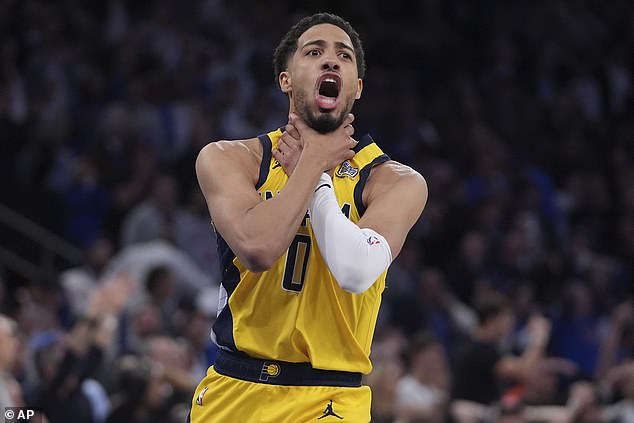
Opponents have also exploited Mitchell’s teams. In 2020, Denver’s Jamal Murray matched Mitchell’s scoring (36 PPG), and Nikola Jokić’s playmaking overwhelmed Utah’s defense. In 2023, Jalen Brunson’s 27.8 PPG outdueled Mitchell, exposing Cleveland’s lack of secondary creation. In 2025, Tyrese Haliburton’s clutch three-pointers sealed Cleveland’s fate.
The Ball-Hogging Debate: Fact or Fiction?
The accusation of “ball-hogging” stems from Mitchell’s high usage and low assist numbers relative to his role as a primary ball-handler. His 3.9 assists per game in the 2025 playoffs, despite a 38% usage rate, rank him below other star guards like Haliburton (8.9 APG) or Brunson (7.5 APG). Advanced metrics like assist percentage (AST%)—22.7% in the playoffs vs. 26.1% in the regular season—suggest Mitchell is less likely to create for others in high-stakes games. His teammate shot attempts often suffer: in 2025, Mobley averaged 6.8 field goal attempts (FGA) per game in the playoffs, compared to 11.2 in the regular season.
However, Mitchell’s usage is partly a product of his teams’ designs. Utah relied on him to fill the void left by Gordon Hayward, and Cleveland’s offense leaned heavily on him with Garland injured. His 70.4 efficiency rating in his 71-point game (2023) and 48-point playoff performance in 2025 show he can be highly efficient when hot. The challenge lies in balancing his scoring with playmaking, especially when defenses key in on him in the playoffs.
Navigating the Path Forward
Mitchell’s playoff resume is a paradox: he’s one of the NBA’s best postseason scorers, yet his teams have consistently fallen short. Advanced analytics point to areas of concern—high usage, declining efficiency, and turnovers in clutch moments—but also highlight his ability to carry teams, as seen in his 2024 Game 7 heroics. To shed the “choke” label, Mitchell must evolve as a playmaker, trusting teammates like Mobley and Garland to share the load. Cleveland’s front office also bears responsibility, needing to bolster the roster with shooters and defenders to complement Mitchell’s style.
The 2025 season, with Cleveland’s 64 wins ending in a second-round exit, underscores the urgency of these changes. As Mitchell enters his prime at 29, his ability to adapt—balancing his scoring instincts with team-oriented play—will determine whether he can lead a team to a championship or remain a regular-season star whose playoff dreams fall short.



Leave a comment