
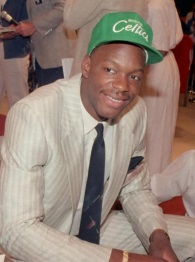
Every June, the NBA Draft unfolds with a mix of excitement, anticipation, and dreams. Sixty young men hear their names called, each one stepping into the spotlight with the promise of a professional basketball career. For some, it’s the start of a journey to stardom—LeBron James, Kevin Durant, or Luka Dončić. For others, it’s a fleeting moment of hope that never materializes. These are the players who, despite being drafted, never play a single minute in an NBA game. Their stories are a mix of tragedy, missed opportunities, and the harsh realities of a league where talent alone isn’t enough. This article dives into the lives of these forgotten draft picks, exploring why they never made it to an NBA court and what their stories teach us about the unpredictable nature of the draft.
The Fragile Path from Draft Night to the NBA
The NBA Draft is often portrayed as a golden ticket, a guaranteed entry into the world’s premier basketball league. But the reality is far more complex. Being selected—whether in the lottery, the first round, or the second—doesn’t guarantee a roster spot, let alone playing time. Since 1980, over 130 drafted players have never appeared in an NBA game, including at least 15 top-30 picks. The reasons are as varied as the players themselves: catastrophic injuries, international prospects who choose to stay overseas, off-court issues, team depth charts too stacked to crack, or draft-and-stash experiments that never pan out. Each case is a reminder that the NBA is a brutal meritocracy where talent must align with opportunity, health, and luck.
For fans, these stories are both fascinating and sobering. They highlight the fragility of a dream that seems so close on draft night. A player can have all the tools—athleticism, skill, work ethic—and still fall short. Some are undone by circumstances beyond their control, like a poorly timed injury or a team’s roster decisions. Others make choices that lead them away from the NBA, prioritizing different paths. Together, these players form a shadow roster of “what ifs,” their potential forever frozen in the imaginations of scouts, coaches, and fans.
The Tragic and the Talented: Stories of the Unseen
Len Bias: The Ultimate “What If”
No story looms larger in the annals of unrealized NBA potential than that of Len Bias. Selected second overall by the Boston Celtics in 1986, Bias was a 6’8” forward from Maryland whose athleticism and scoring prowess drew comparisons to Michael Jordan. Scouts raved about his explosive dunks, smooth jumper, and relentless energy, predicting he’d be a cornerstone for a Celtics dynasty already featuring Larry Bird, Kevin McHale, and Robert Parish. Tragically, Bias never got the chance to prove them right. Just two days after the draft, he died of a cocaine overdose, shocking the basketball world and leaving behind one of the sport’s most enduring “what if” scenarios. His loss was felt not just by the Celtics but by the entire league, which mourned a talent who could have reshaped the NBA’s competitive landscape.
Fran Vázquez: The Lottery Pick Who Stayed in Spain
In 2005, the Orlando Magic took a gamble on Fran Vázquez, a 6’10” Spanish center, with the 11th overall pick. Vázquez was a rising star in Europe, known for his rim protection and fluid athleticism. The Magic envisioned him as a key piece alongside a young Dwight Howard. But in a move that stunned the basketball world, Vázquez chose to remain in Spain, opting for a successful EuroLeague career over the NBA. Despite Orlando’s persistent efforts to bring him stateside, he never crossed the Atlantic. Vázquez’s decision underscores a reality of the draft: some international players, even lottery picks, prioritize familiarity, comfort, or guaranteed roles overseas over the uncertainty of the NBA.
Bobby Plump: The Real-Life Hoosiers Hero
The story of Bobby Plump is less tragic but no less intriguing. Drafted 88th overall by the St. Louis Hawks in 1957, Plump was already a legend in Indiana, having hit the game-winning shot for Milan High School in 1954—a moment that inspired the iconic film Hoosiers. Despite his draft selection, Plump never signed with the Hawks, choosing instead to return to Indiana, where he became a local icon through coaching and community involvement. His story is a reminder that the NBA isn’t the only path to basketball immortality; for some, legacy is built closer to home.
Marcus Liberty: The Prospect Who Faded Away
Marcus Liberty was a star at Illinois, a 6’8” forward with scoring versatility and high-flying dunks that made him a projected first-round talent. By the time the Denver Nuggets selected him 42nd overall in 1990, however, his stock had slipped due to inconsistent college performances and questions about his role. Liberty attended training camps and shined in summer leagues, but he never logged an NBA minute. His confidence waned, and the Nuggets’ roster offered little room for a rookie to break through. Liberty’s story highlights how quickly a prospect’s momentum can stall, even when the talent is undeniable.
Pavel Podkolzin: The 7’5” Gamble
In 2004, the Utah Jazz (via a trade with the Dallas Mavericks) took a chance on Pavel Podkolzin, a 7’5” Russian center whose size alone made him a tantalizing prospect. Drafted 21st overall, Podkolzin was a project player, raw but brimming with potential as a rim protector. He played in preseason games for the Mavericks, but his lack of polish and mobility kept him off the regular-season court. Podkolzin soon returned to Europe, his NBA dream unfulfilled. His case is a classic example of a draft-and-stash gamble that didn’t pay off, as teams bet on physical tools that never translated to NBA readiness.
Other Notables: A Roster of Missed Opportunities
The list of draft picks who never played extends beyond these headliners. Dejan Bodiroga, selected 50th overall by the Sacramento Kings in 1995, became a EuroLeague legend but declined to join the NBA, prioritizing his success overseas. Erazem Lorbek, taken 46th overall by the Indiana Pacers in 2005, followed a similar path, choosing Europe over a potential NBA role. Rick Rickert, a 55th overall pick by the Minnesota Timberwolves in 2003, was once a top high school recruit but couldn’t stick in the league. Even undrafted players like Tyler Wilkerson, who turned heads in the San Antonio Spurs’ 2010 summer league, teased potential but never secured a roster spot. Each name adds to the tapestry of players who came close but never crossed the NBA’s threshold.
Why It Happens: The Forces at Play
The reasons these players never played are as diverse as their backgrounds. Injuries are a common culprit, as seen in cases like Len Bias, whose life was cut short, or others who faced career-altering physical setbacks. International prospects like Vázquez and Bodiroga often face cultural and professional barriers, choosing the stability of European leagues over the NBA’s uncertainty. Off-court issues, whether related to character, work ethic, or personal decisions, can also derail a career before it starts. For some, like Liberty, the obstacle is a loaded depth chart—being drafted by a team with established stars or veterans can leave little room for a rookie to shine. And then there are the draft-and-stash experiments, where teams select players with long-term potential but no immediate plan, as with Podkolzin, only to see them fade from the NBA picture.
The draft itself is a gamble, a lottery in every sense of the word. Teams weigh talent, fit, and potential against immediate needs, often making decisions that look questionable in hindsight. For every bust, there’s a story of circumstance—a player drafted by the wrong team, at the wrong time, or with the wrong injury history. The NBA’s cutthroat nature means that even first-round picks can slip through the cracks if the stars don’t align.
Lessons from the Unseen
The stories of these players are more than cautionary tales; they’re a window into the complexity of the NBA Draft. Talent is only part of the equation. Success requires health, opportunity, and a bit of luck. A player like Kenyon Martin Sr., drafted first overall in 2000, narrowly avoided joining this list when a severe leg injury threatened his career before it began. His recovery and subsequent success with the New Jersey Nets highlight how fragile the line is between stardom and obscurity.
For fans, these stories offer a deeper appreciation of the draft’s unpredictability. They remind us that some of the best basketball players in the world—EuroLeague stars like Bodiroga or local legends like Plump—never need the NBA to leave a legacy. For teams, they underscore the importance of scouting, development, and roster management. And for fantasy basketball enthusiasts, particularly those in dynasty leagues, these tales are a reminder to look beyond draft position and hype, focusing on the intangibles that turn potential into production.
The Bigger Picture
The NBA Draft is a moment of hope, but it’s also a moment of risk. For every player who becomes a household name, there are others whose names fade into obscurity, their potential locked away in grainy college highlights or overseas box scores. Len Bias, Fran Vázquez, Bobby Plump, Marcus Liberty, Pavel Podkolzin, and countless others represent the dreams that didn’t quite make it to the NBA hardwood. Their stories are a testament to the draft’s unpredictability and the fine margins that separate success from silence. As we celebrate the stars who light up the league, let’s also remember the players we never saw—because their journeys, though incomplete, are part of the NBA’s rich and complex history.



Leave a comment