
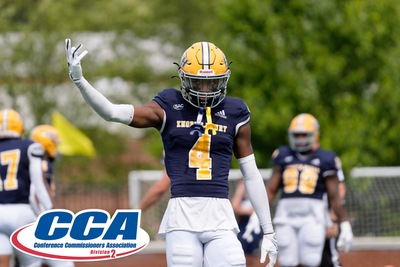
Emory & Henry College, a small liberal arts institution nestled in the Blue Ridge Mountains of Emory, Virginia, has left an indelible mark on American football through its innovative offensive tactics. Known as the Wasps, this NCAA Division II program, with a student body of just over 1,300, has a football legacy that extends far beyond its modest size. The college’s pioneering “Emory & Henry Formation” revolutionized offensive strategy in the 1950s and continues to influence play-calling at higher levels of the sport, from college to the NFL.
A Storied Football Tradition
Founded in 1836, Emory & Henry has a rich athletic history dating back to its first football game in 1893, when it defeated Virginia Tech 6–0. The program has since claimed 11 Old Dominion Athletic Conference (ODAC) championships and made multiple NCAA Division III playoff appearances, including a semifinal run in 1987. The Wasps’ nickname, coined in 1921 after a tenacious performance against the University of Tennessee, reflects their reputation for resilience and ingenuity. Their distinctive blue-and-gold striped uniforms inspired a Knoxville newspaper to liken their defense to a swarm of wasps, a moniker that stuck.
Despite competing against larger programs, Emory & Henry has consistently punched above its weight. The team has defeated notable Division I schools like Appalachian State, Marshall, and Middle Tennessee State, and boasts three NFL draftees, including Earl Hawkins, selected by the Boston Patriots in 1964. The program’s success is rooted in a culture of innovation and adaptability, most notably exemplified by the development of the Emory & Henry Formation.
The Emory & Henry Formation: A Tactical Innovation
In the early 1950s, under head coach Conley Snidow, Emory & Henry introduced a groundbreaking offensive formation that would bear the college’s name. Unlike traditional setups that grouped all five ineligible offensive linemen in the center, the Emory & Henry Formation spread the offensive line and receivers into three distinct pods across the field: two tackles and two receivers positioned near the sidelines, with the center, guards, quarterback, and a running back in the middle. This unorthodox alignment, resembling a punt formation, was designed to confuse defenses and exploit mismatches.
The formation’s primary goal was to disrupt defensive alignments. By spreading the tackles wide, it forced defenses to either stretch thin to cover the sidelines, leaving the middle vulnerable, or overcommit to the interior, opening up opportunities for quick passes to the outside. Common plays included wide receiver screens, streak routes to outrun crowded defenders, or runs up the gut when defenses overadjusted. The formation’s versatility allowed for trick plays, such as backward passes to linemen near the sidelines followed by downfield throws, further confounding opponents.
While its inherent limitations—such as the inability of tackles to catch forward passes or advance downfield—relegated it to a situational strategy, the formation’s novelty made it a potent change-of-pace tactic. Its impact was significant enough to be featured in EA Sports’ NCAA Football 07 video game, cementing its place in football lore.
Influence on Higher Levels of Football
The Emory & Henry Formation’s influence extended far beyond the small college fields of Virginia. In the 1990s, legendary coach Steve Spurrier, who grew up attending Wasps games in nearby Johnson City, Tennessee, revived the formation as a trick play during his tenures at the University of Florida and the University of South Carolina. Spurrier’s adaptation, which he dubbed the “Emory and Henry,” became a staple in his playbook, using its unconventional alignment to create big-play opportunities.
The formation also caught the attention of the NFL. In 2013, Chip Kelly, then head coach of the Philadelphia Eagles, employed a variation of the Emory & Henry Formation in a Monday Night Football game against the Washington Redskins. The play, a read-option with Michael Vick at quarterback, showcased the formation’s ability to disrupt even professional defenses. The Eagles’ use of the formation divided the offensive line into three groups, with tackles Jason Peters and Lane Johnson positioned wide, creating confusion for Washington’s defense.
In 2015, the New England Patriots experimented with a twist on the formation, placing an eligible-numbered receiver in the ineligible tackle position to further exploit defensive alignments. This prompted the NFL to impose a rule change in 2015 prohibiting such substitutions, a testament to the formation’s disruptive potential. More recently, in 2018, South Carolina, under coach Will Muschamp, used the formation for an eight-play drive against Kentucky, marching 49 yards by leveraging its unique spacing.
The formation also inspired the A-11 offense, a high school scheme developed in 2007 that combined the Emory & Henry with the wildcat formation. The A-11 exploited a loophole in high school rules allowing all players to be eligible receivers, creating unprecedented flexibility. Though the loophole was closed in 2009, the A-11’s brief success highlighted the enduring ingenuity of Emory & Henry’s original concept.
A Legacy of Innovation
Emory & Henry’s contribution to football tactics underscores the program’s outsized influence. Despite its small size and Division II status, the Wasps have shaped the strategic evolution of the game by introducing a formation that challenged conventional thinking. The Emory & Henry Formation’s emphasis on spacing and deception prefigured modern spread offenses, which prioritize horizontal field stretching to create running and passing lanes. Coaches like Curt Newsome, who led the Wasps to an ODAC Coach of the Year award in 2014, have continued to emphasize innovative offensive line play, building on the program’s legacy.
Today, as the Wasps compete in the South Atlantic Conference, their football program remains a beacon of tradition and creativity. The Emory & Henry Formation, though now primarily a trick play, continues to inspire coaches seeking to outsmart opponents. From the rolling hills of Virginia to the bright lights of the NFL, this small school’s tactical innovation proves that big ideas can come from the unlikeliest of places.



Leave a comment