
The NBA is a world of slam dunks, clutch shots, and larger-than-life personalities, but beneath the hardwood heroics lies a shadowy realm of whispers and speculation. From rigged drafts to frozen envelopes, NBA fans have spun conspiracy theories that range from plausible to downright unhinged. In this tongue-in-cheek exploration, we dive into the most unbelievable NBA conspiracy theories that just might—against all odds—hold a sliver of truth. Buckle up, because we’re about to venture into the wild side of basketball lore, where skepticism meets a healthy dose of “what if?”
The Frozen Envelope: The 1985 Draft Lottery Fix
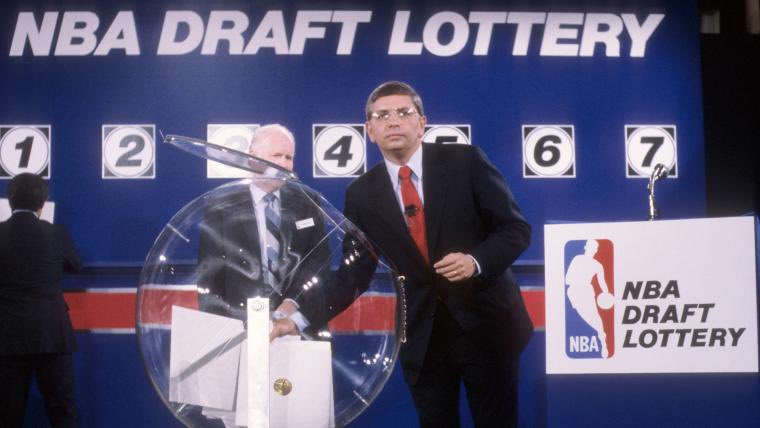
Let’s start with the granddaddy of NBA conspiracies: the 1985 draft lottery. The New York Knicks, desperate for a star, landed the No. 1 pick and selected Patrick Ewing, a generational talent from Georgetown. Sounds like luck, right? Not so fast. Fans and analysts have long speculated that the NBA rigged the lottery to ensure Ewing ended up in the Big Apple, a major market starving for relevance. The theory hinges on a suspiciously creased envelope—allegedly frozen or marked—that Commissioner David Stern conveniently picked from the lottery drum. Video footage shows Stern handling the envelopes with a bit too much purpose, and some claim a bent corner made Ewing’s envelope stand out.
Why It Might Be True: The NBA was struggling in the mid-1980s, with declining viewership and a drug-tainted image. Placing a superstar like Ewing in New York could boost ratings and revenue. The lottery process was less transparent back then, using physical envelopes instead of today’s ping-pong balls, leaving room for tampering. While no hard evidence exists, the Knicks’ miraculous luck and Stern’s cagey demeanor fuel the speculation. Could the NBA have pulled a fast one? It’s not impossible.
Why It’s Probably Not: Random chance happens, and the Knicks were one of seven teams with equal odds. The “frozen envelope” could just be a creased piece of paper, and Stern’s awkward handling might reflect nerves, not deceit. Still, the theory persists, a testament to fans’ distrust of the league’s early lottery system.
Michael Jordan’s “Secret” Suspension
Michael Jordan’s sudden retirement in 1993, at the peak of his powers, stunned the basketball world. The official story: MJ, fresh off three straight championships, was exhausted and wanted to try baseball. But conspiracy theorists have another take: the NBA secretly suspended Jordan for gambling. Rumors swirled that Jordan’s well-documented love of betting—on golf, cards, and even trivial games—crossed a line, prompting the league to “encourage” his hiatus to avoid a PR disaster. The timing, just months after reports of Jordan’s gambling debts surfaced, raised eyebrows. His pivot to minor league baseball with the Birmingham Barons only added fuel to the fire—why would the greatest basketball player ever walk away for a sport he hadn’t played since high school?
Why It Might Be True: Jordan’s gambling habits were no secret. He admitted to paying off debts, and a book by Richard Esquinas claimed Jordan owed him $1.2 million. The NBA, protective of its golden goose, might have wanted to quietly sideline him to avoid a scandal like the one that rocked baseball with Pete Rose. Jordan’s return in 1995, after 18 months away, aligns with the idea of a discreet “suspension” period.
Why It’s Probably Not: Jordan’s competitive nature and desire for new challenges could explain his baseball stint. His father’s murder in 1993 also played a role, as Jordan cited fulfilling his dad’s dream of seeing him play baseball. The NBA had no motive to bench its biggest star during a ratings boom. Still, the timing and Jordan’s cryptic comments keep this theory alive.
The NBA Rigged the 2002 Western Conference Finals
The 2002 Western Conference Finals between the Sacramento Kings and Los Angeles Lakers is a sore spot for Kings fans. The Kings, a high-flying team led by Chris Webber and Mike Bibby, seemed poised to dethrone the Shaq-and-Kobe Lakers in Game 6. But the officiating was, to put it mildly, suspect. The Lakers shot 27 free throws in the fourth quarter alone, compared to the Kings’ nine, with questionable calls tilting the game. The Lakers won, and went on to claim the title. Former referee Tim Donaghy, later convicted of betting on games, claimed the NBA manipulated the series to favor the Lakers, ensuring a bigger-market team advanced.
Why It Might Be True: Donaghy’s allegations, while self-serving, align with the eye-test from Game 6. The free-throw disparity was glaring, and several calls—like a no-call on a blatant elbow by Kobe Bryant to Mike Bibby’s face—felt one-sided. The NBA’s desire for a Lakers dynasty, with its star power and market appeal, could have influenced officiating to extend the series.
Why It’s Probably Not: Refereeing mistakes happen, and the Lakers were a dominant team with two superstars who naturally drew fouls. Donaghy’s credibility is shaky, given his conviction, and his claims lack hard evidence. Still, the sting of Game 6 keeps this conspiracy burning in Sacramento.
LeBron James and the “Decision” Script
LeBron James’ 2010 televised special, The Decision, where he announced his move from Cleveland to Miami, was a PR fiasco. The hour-long ESPN spectacle, complete with dramatic pauses and a boys-and-girls-club donation, felt like a scripted drama. Conspiracy theorists argue the NBA orchestrated the event to maximize drama and ratings, turning LeBron into a villain to boost the league’s narrative. Some even claim the Heat’s “Big Three” formation—LeBron, Dwyane Wade, and Chris Bosh—was prearranged by the league to create a superteam to rival the Celtics and Lakers.
Why It Might Be True: The NBA thrives on storylines, and LeBron’s move to Miami created a polarizing saga that drove viewership. The production value of The Decision, with ESPN’s complicity, suggests league involvement. Wade and Bosh’s coordinated signings with Miami, facilitated by synchronized contracts, hint at planning beyond mere player decisions.
Why It’s Probably Not: LeBron’s camp, not the NBA, pitched The Decision, and the backlash was genuine, not scripted. Players have agency, and LeBron, Wade, and Bosh were friends who wanted to team up. The conspiracy overstates the NBA’s control over free agency. Still, the theatricality of the event keeps fans wondering.
The NBA’s Anti-Spurs Agenda
The San Antonio Spurs, under Gregg Popovich, Tim Duncan, and later Kawhi Leonard, were a dynasty built on fundamentals, not flash. Yet fans noticed the Spurs rarely got the media love or prime-time slots of teams like the Lakers or Knicks. The conspiracy? The NBA deliberately downplayed the Spurs to promote bigger markets and more marketable stars. From limited All-Star votes for Spurs players to lackluster TV coverage, some believe the league wanted to keep the small-market Spurs in the shadows.
Why It Might Be True: The NBA is a business, and big markets like Los Angeles and New York drive revenue. The Spurs’ “boring” style—methodical offense, team-first play—didn’t fit the league’s push for highlight-driven stars like LeBron or Kobe. Scheduling data shows the Spurs often played fewer national TV games despite their success, lending credence to the bias claim.
Why It’s Probably Not: The Spurs won five titles from 1999 to 2014, hardly the resume of a suppressed team. Their low-key style and small-market status naturally drew less casual fan interest. Popovich’s disdain for media hype didn’t help. Still, the lack of spotlight for a dynasty keeps this theory simmering.
The Phantom Foul Calls: Referee Bias for Superstars
Ever notice how superstars like LeBron James, Kevin Durant, or Giannis Antetokounmpo seem to get every close call? The “superstar whistle” theory suggests referees favor big-name players to keep them on the court, boosting ratings and ticket sales. Fans point to games where marginal contact on a star results in free throws, while role players get ignored. Some even claim the NBA instructs refs to protect marketable players to maintain the league’s star-driven narrative.
Why It Might Be True: Stars sell tickets, and the NBA benefits from keeping them in games. Studies, like one from FiveThirtyEight in 2018, show top players receive slightly more favorable calls. Tim Donaghy’s claims of league directives to favor certain outcomes add fuel, though his reliability is questionable.
Why It’s Probably Not: Superstars drive to the rim more, drawing more contact, which explains higher free-throw rates. Refs are human, and subconscious bias toward big names is possible but not necessarily a league mandate. The theory thrives on fan frustration but lacks concrete proof.
The NBA’s Secret Time Machine (Okay, Maybe Not)
Just for fun, let’s entertain the wildest theory: the NBA has a time machine to manipulate outcomes. Why did the Warriors blow a 3-1 lead in 2016? Time travel. Why did the 1990s Bulls dominate? The league sent MJ back to perfect his fadeaway. Alright, this one’s pure satire, but it captures the fanbase’s love for spinning wild tales when logic fails. The NBA’s unpredictability fuels these theories, and while a time machine is absurd, the passion behind these conspiracies is very real.
Why We Love NBA Conspiracies
NBA conspiracy theories thrive because basketball is more than a game—it’s a soap opera with dunks. Fans see patterns in chaos, from creased envelopes to phantom fouls, because they love the drama. The league’s history of questionable calls, opaque processes, and market-driven decisions gives just enough smoke to keep these fires burning. Are these theories true? Probably not. But in a league where perception is everything, they’re too juicy to ignore.


Leave a comment