
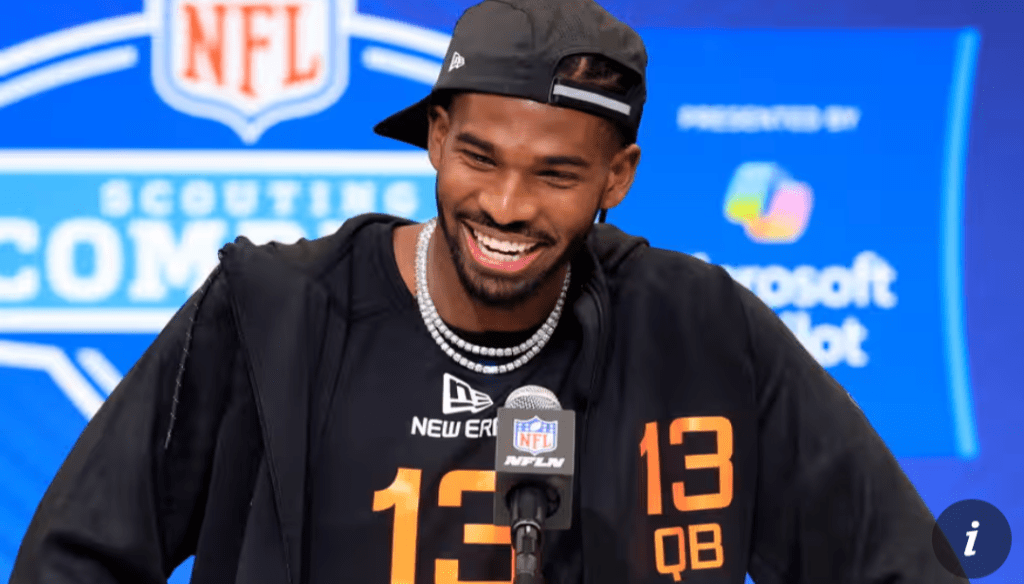
The New Orleans Saints are at a crossroads heading into the 2025 NFL Draft. With Derek Carr sidelined by a shoulder injury that may require surgery, the team faces the prospect of starting the season without their veteran quarterback for several weeks—or potentially longer. Currently slotted at the No. 9 overall pick, the Saints have a golden opportunity to address their long-term quarterback situation by taking a bold swing on Colorado’s Shedeur Sanders. While some mock drafts project Sanders falling as far as No. 21 to the Pittsburgh Steelers, the Saints should consider trading up to secure him, especially given the uncertainty surrounding Carr and the team’s rebuilding trajectory. Here’s why targeting Sanders makes more sense than chasing a wide receiver like Tetairoa McMillan or sticking with short-term solutions.
The Case for Shedeur Sanders
Shedeur Sanders is widely regarded as one of the top quarterback prospects in the 2025 draft, often ranked as the No. 2 QB behind Miami’s Cam Ward. His 2024 college season showcased his elite accuracy, poise, and ability to make big plays, with 14 touchdowns and just one interception on deep passes (20+ yards) and a 92.6 PFF passing grade on such throws. Sanders’ athleticism and leadership skills make him a high-upside candidate to develop into a franchise quarterback, something the Saints desperately need as they plan for life after Carr. With Carr’s injury casting doubt on his 2025 availability—and potentially his long-term fit with the team—Sanders represents a chance to reset the quarterback position. The Saints have already shown interest in Sanders, with reports of their heavy presence at his workouts and speculation that they’re the betting favorites to draft him. Kellen Moore, the Saints’ first-year head coach, could mold Sanders into the centerpiece of a revitalized offense, leveraging his arm talent and mobility to unlock the potential of players like Chris Olave and Alvin Kamara.
Why Not a Wide Receiver?
The Saints struggled at wide receiver in 2024, with injuries to Rashid Shaheed and Chris Olave exposing a lack of depth. This has led to speculation that they might target Arizona’s Tetairoa McMillan, a 6-foot-5, 219-pound receiver with elite contested-catch ability and run-after-catch skills. However, the 2025 draft class is not particularly strong at wide receiver, lacking the all-around playmakers worthy of a top-10 pick. Unless a generational talent like Travis Hunter is available, spending a first-round pick on a receiver like McMillan—who, while talented, isn’t a surefire game-changer—feels like a risky move in a draft where depth at the position can be found in later rounds. Moreover, the Saints’ offense already has pieces in place with Olave and Shaheed, who are expected to return from injury. Adding a quarterback with Sanders’ potential would do more to elevate the existing talent than drafting a receiver who may not provide immediate impact in a rebuilding year.
A Rebuilding Year Calls for a Bold Move
The 2025 season is shaping up as a rebuilding year for the Saints, with a 5-12 record in 2024 and significant roster holes to fill. Carr, at 34 years old and with a contract that runs through 2027, is not the long-term answer, and his injury only underscores the need for a succession plan. Rather than relying on a stopgap like Jake Haener or a veteran free agent, the Saints should capitalize on this opportunity to draft a potential franchise quarterback.Sanders could sit behind Carr (if he returns) or a bridge quarterback, learning Moore’s system while developing his skills. If Sanders shows promise, he could be the starter by 2026, giving the Saints a cost-controlled, high-upside QB to build around. If he underperforms, the Saints could explore trading him or Carr, depending on their respective trade values, as both could attract interest from QB-needy teams. This flexibility makes Sanders a low-risk, high-reward pick compared to a wide receiver who may not move the needle in a transitional season.
The Counterargument: Why Caution Might Prevail
Some argue the Saints should avoid Sanders due to concerns about his draft stock or the “baggage” associated with his high-profile persona and family ties. Others suggest addressing more immediate needs, like the offensive line or secondary, given the team’s cap constraints and roster deficiencies. However, these concerns are outweighed by the potential reward of landing a quarterback who could transform the franchise. The Saints’ history of bold draft moves—think Reggie Bush in 2006—shows they’re willing to take risks for star power, and Sanders fits that mold. As for the offensive line or secondary, the 2025 draft offers depth in these areas, allowing the Saints to address them in later rounds or through free agency. Quarterback, on the other hand, is a premium position where elite talent is rarely available outside the first round, making Sanders a priority.
Swing for the Fences
The New Orleans Saints have a rare chance to reshape their future in the 2025 NFL Draft. With Derek Carr’s injury creating uncertainty and the team in rebuild mode, drafting Shedeur Sanders selecting him at No. 9 if he falls—offers a path to long-term stability at quarterback. Passing on Sanders for a wide receiver like Tetairoa McMillan, in a draft lacking top-tier talent at the position, would be a missed opportunity to address the game’s most critical role. By partnering with the Titans to secure Sanders, the Saints can take a calculated risk on a player with the tools to become their next franchise quarterback, setting the stage for a brighter future in New Orleans.



Leave a comment