
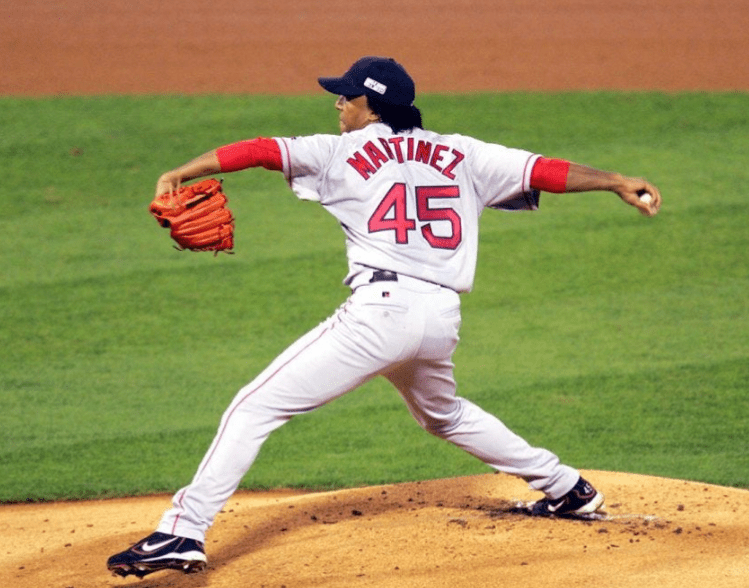
Baseball is a game of inches, milliseconds, and subtle cues. A MLB Tonight segment featuring pitching legend Pedro Martinez pulled back the curtain on one of the game’s most intriguing tells: the bat waggle. According to Martinez, the way a batter waggles their bat before a pitch can reveal where they want the ball and where they’re likely to do the most damage. This revelation, paired with a deep dive from the social media account Hitters Lab, has sparked a fascinating discussion about whether hitters are unknowingly tipping their hands-and how pitchers and batters might adapt in the ever-evolving chess match of MLB at-bats.
In the MLB Tonight segment, Martinez shared a gem from his playing days, recounting advice from an older player who taught him to watch a batter’s bat waggle. “It tells a story,” Martinez said, explaining that the waggle often signals where a hitter feels most comfortable and where they’re likely to hit the ball hardest. The segment highlighted two sluggers from the late ’90s, Mark McGwire and Ken Griffey Jr., both known for their pronounced bat waggles. Martinez pointed out that both players waggled their bats low over the plate, a clue that they were hunting fastballs in that zone. Sure enough, their hitting tendencies matched: low fastballs were their bread and butter, often launched into the bleachers.
The segment then turned to modern stars, focusing on Mike Trout and Nelson Cruz. Trout’s bat waggle, low and inside, aligns perfectly with his heat map, showing his best contact and power in that exact spot. Cruz, meanwhile, wags his bat right in the center of the strike zone, mirroring his ability to crush pitches in that area. Martinez’s insight was clear: observant pitchers can use the waggle to anticipate a hitter’s preferences and adjust their approach accordingly.
Hitters Lab’s Deep Dive: Heat Maps and Bat Waggles
Taking Martinez’s observation to the next level, the social media account Hitters Lab (@HittersLab on X) conducted a comprehensive analysis of bat waggles, pairing them with heat maps from the last five MLB seasons (2020–2024). Their study focused on eight prominent hitters known for their bat waggles: Nelson Cruz, Mike Trout, Pete Alonso, Albert Pujols, Freddie Freeman, Hunter Pence, Joey Votto, and Shohei Ohtani. Using Statcast data, Hitters Lab mapped where these players hit the ball hardest and compared it to their pre-pitch bat movements. The results were striking.
For Cruz and Trout, the findings echoed Martinez’s analysis: their waggles corresponded almost exactly to their hottest hitting zones. Pete Alonso and Albert Pujols followed suit, with Alonso’s waggle low and in matching his power zone for home runs, and Pujols’ centered waggle aligning with his ability to drive pitches in the middle of the plate during his final seasons. Perhaps the most compelling example was Freddie Freeman. Hitters Lab showcased a clip from the 2024 World Series, where Freeman’s bat waggle was positioned down and in. In that at-bat, he smashed a grand slam off a pitch in that precise location. His five-year heat map confirmed the pattern: down-and-in pitches are Freeman’s wheelhouse.
But Hitters Lab didn’t stop there. They proposed a bold new angle: what if the bat waggle isn’t the only tell? They turned their attention to the on-deck circle, where players often take practice swings to prepare for their at-bat. Analyzing Hunter Pence, Joey Votto, and Shohei Ohtani, Hitters Lab found that their on-deck swing paths also matched their heat maps. Pence’s quirky, high-energy swings in the on-deck circle mirrored his ability to hammer pitches up in the zone. Votto’s deliberate, controlled swings correlated with his disciplined approach, favoring pitches in the middle and upper strike zone. Ohtani, ever the unicorn, showed on-deck swings that aligned with his power to all fields, particularly low and away.
The Big Question: Will This Change the Game?
The insights from Martinez and Hitters Lab raise a tantalizing question: could bat waggles and on-deck swings become a game-changer for pitchers and batters in MLB? To answer, let’s break down the potential impact on both sides of the at-bat and consider whether these habits are a vulnerability or just another layer in baseball’s cat-and-mouse game.
Impact on Pitchers
For pitchers, the bat waggle could be a goldmine of information—if they know how to use it. As Martinez demonstrated, an observant pitcher can identify a hitter’s preferred zone and avoid it, opting instead for pitches that exploit weaknesses. For example, if Mike Trout’s waggle signals he’s hunting low-and-inside fastballs, a pitcher might lean on high fastballs or breaking balls away to disrupt his timing. Similarly, a pitcher facing Freddie Freeman could prioritize pitches up and away, knowing his grand-slam power lies down and in.
The on-deck circle adds another layer. If pitchers or coaching staffs study Hitters Lab’s findings, they might start analyzing on-deck swings during games or in pregame preparation. Advanced scouting, already a staple in MLB, could incorporate video analysis of on-deck routines to predict a hitter’s approach. Teams with access to real-time data, like pitch-tracking systems and tablet-equipped dugouts, could relay these insights to pitchers mid-game, giving them an edge in crucial situations.
However, there’s a catch. Not every pitcher has Pedro Martinez’s keen eye or the mental bandwidth to process subtle cues while facing a 50,000-fan crowd and a 3-2 count. Reading a bat waggle or recalling an on-deck swing requires split-second decision-making, and even elite pitchers might struggle to integrate this information under pressure. Plus, as Hitters Lab noted, bat waggles often become more pronounced in pitcher’s counts (e.g., 0-2 or 1-2), when hitters are protecting the plate rather than hunting their ideal pitch. This variability could make it harder to rely on the waggle as a consistent tell.
Impact on Batters
For batters, the bat waggle and on-deck swing might now be a double-edged sword. On one hand, these habits are deeply ingrained, often developed over years to help hitters feel comfortable and time their swings. Mike Trout isn’t waggling his bat to tip off pitchers; he’s doing it to stay loose and visualize his swing. Similarly, Shohei Ohtani’s on-deck routine is about preparing his body, not broadcasting his hitting zone. Asking players to abandon these habits could disrupt their rhythm and mental preparation, potentially doing more harm than good.
On the other hand, hitters might need to adapt if pitchers start exploiting these tells. Some could intentionally alter their waggles to mislead pitchers—waggling high and away while secretly hunting low and in, for instance. Others might simplify their pre-pitch movements to give away less information. In the on-deck circle, players like Joey Votto, known for their cerebral approach, might vary their practice swings to keep opponents guessing. However, changing ingrained habits isn’t easy, and not every hitter has the discipline or awareness to do so effectively.
There’s also the question of whether bat waggles are as predictive as they seem. Hitters Lab’s heat maps show correlations, but correlation isn’t causation. A hitter’s hot zone might align with their waggle simply because that’s where they naturally swing best, not because the waggle itself is a tell. Additionally, elite hitters like Ohtani and Freeman can adjust to pitches outside their preferred zones, making it risky for pitchers to overcommit to avoiding the waggle zone.
The Broader Game
The bat waggle revelation fits into a larger trend in baseball: the analytics arms race. Statcast, introduced in 2015, has already transformed how teams evaluate hitters and pitchers, with metrics like exit velocity, launch angle, and pitch spin rate shaping strategy. The introduction of bat-tracking data in 2024, including bat speed and swing length, has added another dimension, allowing analysts to study swing mechanics in unprecedented detail. Hitters Lab’s work suggests that bat waggle and on-deck swing analysis could be the next frontier, especially as teams integrate biomechanical data and optical tracking to decode player movements.
Yet, as with any innovation, there’s a counter-reaction. Just as hitters adapted to defensive shifts by emphasizing launch angle, they’ll likely find ways to obscure or manipulate their tells if bat waggles become a liability. Pitchers, meanwhile, must balance the pursuit of new insights with the fundamentals of execution—after all, a poorly located pitch in the “wrong” zone is still a home run waiting to happen.
So what now?
The bat waggle and on-deck swing discoveries are a reminder that baseball is a game of constant evolution. Pedro Martinez’s insight, amplified by Hitters Lab’s data-driven analysis, has shone a spotlight on a subtle but potentially game-changing aspect of the pitcher-batter duel. For now, the impact remains speculative. Pitchers with the savvy to read waggles—like Martinez in his prime—might gain an edge, particularly against hitters with predictable habits. Batters, in turn, may need to rethink their pre-pitch routines to stay one step ahead.
As the 2025 MLB season unfolds, keep an eye on whether teams start incorporating bat waggle analysis into their scouting reports or if hitters like Trout, Freeman, or Ohtani adjust their approaches. The data is out there, and in a sport where every advantage counts, the bat waggle could be the next battleground in the war between pitchers and hitters.
What do you think? Are bat waggles a game-changer, or just another quirk in baseball’s endless chess match? Drop your thoughts in the comments below, and let’s talk ball!




Leave a comment