
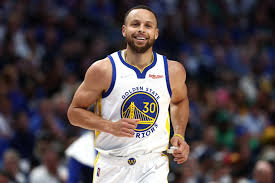
Picture an NBA point guard. Maybe you see Bob Cousy weaving through defenders like a street magician, or Magic Johnson tossing no-look passes that defy physics. Perhaps it’s Stephen Curry launching threes from the parking lot, rewriting what “range” means. At thephantomcall.com, we’re diving into the evolution of the point guard—a position that’s gone from court conductor to game-changer, shaping basketball’s soul since the 1950s. Buckle up for a witty, stat-packed journey through hoops history, as we trace how point guards transformed the NBA from Cousy’s era to Curry’s three-point circus. Ready to meet the floor generals who made basketball sing?
Point guards are the NBA’s maestros, directing offenses with vision, flair, and grit. Since the league’s start in 1946, they’ve evolved from pass-first facilitators to scoring dynamos, reflecting changes in rules, strategies, and athleticism. Per Basketball-Reference, point guards have led the league in assists every season since 1950, but their role has ballooned—think Cousy’s 7.5 APG in 1957 versus Chris Paul’s 22.2 PPG in 2009. This guide unpacks five eras of point guard greatness, with stats, stories, and a few chuckles to keep it lively. Let’s hit the hardwood.
The Pioneers: 1950s–1960s
In the NBA’s early days, point guards were the game’s pulse, setting up clunky offenses in an era of low scoring (88.9 PPG league-wide in 1955). Enter Bob Cousy, the Boston Celtics’ “Houdini of the Hardwood.” From 1950–1963, Cousy averaged 18.4 PPG and 7.5 APG, leading the Celtics to six titles. His behind-the-back dribbles and fast-break passes were revolutionary—think of him as the guy who invented basketball’s swagger.
- Key Stats: Cousy’s 378 assists in 1957 led the league; his 55.5% FT% was, well, very 1950s.
- Impact: Per NBA.com, Boston’s pace (possessions per game) jumped from 90.2 to 95.6 with Cousy, sparking the fast-break era.
- Moment: In Game 7 of the 1957 Finals, Cousy’s 10 assists helped Boston edge St. Louis 125-123 in double OT.
Then there’s Oscar Robertson, the “Big O.” In 1962, he averaged a triple-double (30.8 PPG, 12.5 RPG, 11.4 APG), a feat unmatched until Russell Westbrook in 2017. Robertson’s size (6’5”) and scoring made him a proto-Magic, bullying smaller guards. His 1964 season (31.4 PPG, 9.9 APG) showed point guards could dominate both ends of the stat sheet.
Why It Mattered
These pioneers turned point guards into playmakers, not just ball-movers. Cousy’s flair and Robertson’s versatility laid the blueprint, but the game was still paint-focused—three-pointers didn’t exist, and scoring averaged 100 PPG in 1960.
The Showmen: 1970s–1980s
The 1970s and 1980s brought flash and finesse, with point guards becoming cultural icons. Enter Magic Johnson, the 6’9” Lakers phenom who redefined the position. From 1979–1991, Magic averaged 19.5 PPG and 11.2 APG, winning five titles. His no-look passes and transition mastery made the “Showtime” Lakers must-see TV.
- Key Stats: Magic’s 14.6 APG in 1984 led the league; his 52.0% FG was absurd for a guard.
- Impact: Per Basketball-Reference, the Lakers’ pace hit 103.4 in 1985, tops in the NBA, thanks to Magic’s fast breaks.
- Moment: In Game 6 of the 1980 Finals, rookie Magic dropped 42 points and 15 rebounds filling in at center, clinching the title.
Isiah Thomas, Detroit’s “Bad Boy” leader, brought grit. From 1981–1994, Thomas averaged 19.2 PPG and 9.3 APG, guiding the Pistons to back-to-back titles (1989–1990). His 25-point, 12-assist Game 3 in the 1988 Finals (on a sprained ankle) was pure heart.
Cultural Shift
Magic and Isiah made point guards box-office stars. The 1980s saw scoring rise (110.1 PPG league-wide in 1985), and the three-point line (introduced 1979) hinted at future changes. Point guards were still pass-first but now carried charisma—Magic’s smile and Isiah’s snarl defined the era.
The Floor Generals: 1990s–Early 2000s
The 1990s were physical, with hand-checking and bruising defenses (95.1 PPG in 1995). Point guards became tacticians, outsmarting rugged foes. John Stockton, Utah’s metronome, holds the NBA’s assist record (15,806, 1984–2003). His 14.5 APG in 1990 and 1,164 assists in 1991 are untouchable marks.
- Key Stats: Stockton’s 2.2 steals per game in 1989 led guards; his 48.9% FG was efficient.
- Impact: Utah’s pick-and-roll with Karl Malone averaged 1.1 points per possession (Synergy Sports, 1997), thanks to Stockton’s precision.
- Moment: In Game 6 of the 1997 WCF, Stockton’s buzzer-beating three sent Utah to the Finals.
Jason Kidd, drafted in 1994, brought versatility. His 12.6 APG in 1999 and career 8,725 assists (2nd all-time) paired with 8.7 RPG made him a stat-sheet stuffer. Kidd’s Nets reached the Finals in 2002–2003, leaning on his 9.1 APG.
Strategic Evolution
The 1990s point guard was a chess master, navigating slower paces (93.2 possessions in 1995). The three-point line was still a novelty (13.2 3PA per game in 1995), so point guards leaned on midrange jumpers and playmaking. Stockton and Kidd proved you didn’t need 20 PPG to dominate.
The Scoring Maestros: 2000s–2010s
The 2000s saw point guards become scorers, thanks to rule changes like the hand-checking ban (2004), which boosted offense (97.2 PPG in 2005). Steve Nash, Phoenix’s two-time MVP (2005–2006), ran the “Seven Seconds or Less” offense, averaging 10.5 APG and 18.8 PPG in 2005.
- Key Stats: Nash’s 50.7% FG, 42.8% 3P, and 90.4% FT in 2006 made him a 50-40-90 unicorn.
- Impact: Phoenix’s 110.2 PPG in 2005 led the league, per NBA.com, fueled by Nash’s tempo.
- Moment: In Game 4 of the 2005 WCS, Nash’s 48 points and 12 assists nearly stole a win vs. Dallas.
Chris Paul, the “Point God,” blended scoring and playmaking. From 2005–present, Paul’s 9.4 APG and 2.1 steals per game (2008 leader) defined him. His 22.8 PPG and 11.0 APG in 2009 showed point guards could rival shooting guards.
Game-Changer
The 2000s point guard was a dual threat. Three-point attempts rose (18.1 3PA per game in 2005), and pace quickened (95.7 possessions). Nash and Paul made point guards offensive engines, setting the stage for the modern era.
The Modern Revolution: 2010s–2020s
Enter Stephen Curry, the three-point deity who broke basketball. From 2009–present, Curry’s 4x championships and 402 three-pointers in 2016 (5.1 per game) redefined the point guard. His 30.1 PPG and 54.0% TS% in 2016 earned unanimous MVP honors.
- Key Stats: Curry’s 44.6% 3P career mark is elite; his 11.7 3PA per game in 2023 led the league.
- Impact: Golden State’s 114.9 PPG in 2016, per Basketball-Reference, sparked the small-ball era.
- Moment: In Game 7 of the 2016 WCF, Curry’s 36 points and 7 threes nearly toppled OKC.
Damian Lillard and Luka Doncic pushed boundaries further. Lillard’s 37-foot game-winner vs. OKC (2019, 50 PTS) and Doncic’s 28.8 PPG, 8.6 APG in 2023 show point guards as primary scorers. Doncic’s 34.4% USG% in 2023 rivals Harden’s peak.
Why It’s Different
Today’s point guards are offensive hubs. Three-point attempts exploded (34.2 3PA per game in 2023), and pace hit 99.6 possessions. The 2023 Warriors ran 20% of plays through Curry’s pick-and-rolls (Synergy Sports), a far cry from Cousy’s fast breaks. Scoring (114.7 PPG league-wide) reflects this firepower.
Challenges of the Modern Point Guard
Evolving ain’t easy. Modern point guards face unique hurdles:
- Defensive Pressure: Smaller guards like Curry (6’2”) get targeted. He averaged 0.9 steals in 2023 but faces constant switches.
- Physicality: Hand-checking’s gone, but big wings (e.g., LeBron) bully guards. Paul’s 1.9 steals in 2008 show elite defense is rare.
- Scoring Demands: Teams expect 20+ PPG. Lillard’s 32.2 PPG in 2023 carried Portland’s offense.
- Injury Risk: High usage (e.g., Doncic’s 36.2 MPG in 2023) wears bodies down. Curry missed 26 games in 2018.
Yet, versatility shines. Trae Young’s 10.2 APG and 25.3 PPG in 2023 balance old-school playmaking with new-school scoring.
Cultural Impact: From Icons to Influencers
Point guards aren’t just players—they’re cultural forces. Magic’s Showtime vibe fueled 1980s pop culture. Nash’s floppy hair inspired a generation of pickup players. Curry’s “Splash Brother” persona and 3.8M X followers (2023) make him a global brand. Per ESPN, Curry’s jersey sales topped the NBA in 2022, and his Under Armour deal reshaped sneaker culture. Point guards drive fandom, from Cousy’s autograph lines to Doncic’s TikTok highlights.
How to Spot the Next Great Point Guard
Want to predict the next Curry? Look for:
- Stats: High APG (8+), solid 3P% (35%+), and USG% above 25%. Jalen Brunson’s 24.0 PPG, 6.2 APG in 2023 screams breakout.
- Versatility: Can they score and pass? Shai Gilgeous-Alexander’s 31.4 PPG and 5.5 APG in 2023 say yes.
- Clutch Gene: Check game-winners. Lillard’s 0.9 clutch PPG in 2023 led guards.
- Youth: Under 25 is ideal. Cade Cunningham (21, 6.0 APG in 2023) is one to watch.
Scout rookies on Basketball-Reference or watch G League gems (e.g., Scoot Henderson, 2023).
Conclusion: The Point Guard’s Endless Evolution
From Bob Cousy’s dribbling sorcery to Stephen Curry’s three-point pyrotechnics, the point guard has been basketball’s beating heart for seven decades. Each era—pioneers, showmen, generals, scorers, and revolutionaries—added a layer, turning floor generals into the NBA’s most dynamic stars. Per NBA.com, point guards accounted for 40% of MVP awards since 2000, from Nash to Curry. The numbers don’t lie: this position drives the game.
Head to Basketball-Reference and pull up a classic (say, Magic’s 1987 Finals) or a 2023 thriller (Curry vs. Lillard). Compare their box scores—assists, threes, impact—and see how far the point guard has come. Who’s your favorite floor general? Drop it in the comments, and let’s debate the GOAT. For more hoops history, check thephantomcall.com’s guides on analyzing box scores and NBA rivalries. Keep passing, keep shooting, and keep loving the game!


Leave a comment