
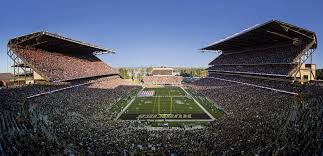
The DeBoer Dream and Its Abrupt End
Picture this: you’re at the peak of a two-year joyride, your football team is the talk of the nation, and you’re one game away from eternal glory. Then, poof—your coach bolts for Alabama, your roster scatters like confetti, and you’re left with a new guy trying to piece together the wreckage. That’s the University of Washington football program in 2025, nursing a serious Kalen DeBoer hangover. DeBoer, the miracle worker from South Dakota, transformed the Huskies from a 4-8 afterthought in 2021 to a 25-3 juggernaut over two seasons, culminating in a 14-1 campaign in 2023 that included a Pac-12 title, three wins over Oregon, and a College Football Playoff National Championship appearance. The 34-13 loss to Michigan in Houston stung, but the future seemed bright—until DeBoer jumped ship to Alabama on January 12, 2024, leaving Washington reeling.
Enter Jedd Fisch, plucked from Arizona on January 14, 2024, to steady a program in chaos. Fisch inherited a gutted roster, a fanbase grappling with betrayal, and the daunting task of transitioning Washington to the Big Ten. The 2024 season, Fisch’s first, was a 6-6 rollercoaster that ended with a bowl game loss, a far cry from DeBoer’s near-perfection. Now, as 2025 dawns, the question looms: can Fisch, a 48-year-old offensive guru with a knack for rebuilding, restore the Husky glory that DeBoer so briefly ignited? Let’s unpack Washington’s 2024 struggles, Fisch’s vision, and the factual road ahead for 2025, with a touch of humor but no sugarcoating.
The DeBoer Era: A Meteoric Rise
To grasp the hangover, we need to revisit DeBoer’s wizardry. Hired in November 2021 after a 9-3 stint at Fresno State, DeBoer inherited a Washington team fresh off a 4-8 debacle under Jimmy Lake. His first season, 2022, saw an 11-2 record, with quarterback Michael Penix Jr., a transfer from Indiana, throwing for 4,641 yards and 31 touchdowns. The Huskies capped the year with a 27-20 Alamo Bowl win over Texas. In 2023, DeBoer’s magic peaked: Washington went 14-1, averaging 36 points per game, with Penix (4,903 yards, 36 touchdowns) earning Heisman runner-up honors. The Huskies beat Oregon twice, including a 34 tets.
The transfer portal was merciless. Starting offensive guard Nate Kalepo, freshman quarterback Austin Mack, and defensive back Dyson McCutcheon entered the portal on January 14, 2024, the same day Fisch was hired. In total, 17 players left, including safety Asa Turner (to Florida) and defensive lineman Keona Wilhite, who sought a scholarship release. High school quarterback Jackson Kollock de-committed, and even committed transfers like Mississippi State quarterback Will Rogers briefly hit the portal before recommitting. Fisch faced a roster with only one scholarship quarterback—four-star freshman Dermaricus Davis—and a depleted offensive line and secondary.
Fisch’s 2024: A Work in Progress
Fisch’s first season was a masterclass in duct-tape roster management. He brought in 25 transfers from 17 programs, including eight who started every game and eight more who started at least once. Key additions included quarterback Will Rogers (3,360 passing yards at Mississippi State in 2023), offensive tackle Drew Azzopardi (San Diego State), defensive tackle Sebastian Valdez (Montana State), and wide receiver Jeremiah Hunter (California). Four transfers—Rogers, Azzopardi, Valdez, and Hunter—had committed to DeBoer but stayed with Fisch. The roster featured 33 true or redshirt freshmen and 20 players in their final eligibility year, leaving a gap in experienced sophomores and juniors.
The 2024 season started with a 35-3 rout of Weber State, where Rogers threw for 250 yards and two touchdowns. A 30-9 win over Eastern Michigan followed, but the Apple Cup against Washington State exposed cracks: Washington outgained the Cougars 521-450 but lost 24-19 due to 135 penalty yards and a questionable fourth-and-goal call. A 21-18 loss at Rutgers, despite outgaining the Scarlet Knights 521-299, was marred by three missed field goals and an illegal substitution penalty by redshirt freshman Vincent Holmes, who ran onto the field prematurely during a blocked punt. A 27-17 upset of No. 10 Michigan at home sparked hope, but a 40-16 thrashing at Iowa—where Iowa led 20-0 at halftime—highlighted defensive woes. The Huskies finished 6-6, losing 34-24 to Louisville in the Sun Bowl.
Statistically, Washington averaged 24.8 points per game in 2024, down from 36 under DeBoer, and allowed 21.3 points defensively, compared to 24.8 in 2023. Rogers completed 68% of his passes for 2,458 yards, 14 touchdowns, and eight interceptions, a solid but unspectacular debut. The running game struggled, averaging 3.9 yards per carry, and the defense, while improved under new coordinator Steve Belichick, surrendered 5.2 yards per rush in the Iowa loss. Penalties (7.8 per game) and turnovers (12 total) plagued the team, reflecting Fisch’s “work in progress” mantra.
Fisch’s Philosophy: Bigger, Bolder, Different
Fisch’s approach diverges sharply from DeBoer’s. DeBoer’s staff prioritized leaner, faster players, with 70% of the roster shedding weight in 2022 to fit his up-tempo, pass-heavy scheme. The result was a 25-3 record, though Michigan’s physical dominance in the 2023 title game exposed a lack of heft. Fisch, eyeing the Big Ten’s bruising style, prefers bulk: his 2024 roster averaged 10 pounds heavier per player, with offensive linemen like Drew Azzopardi (6’7”, 315 pounds) anchoring the trenches. Fisch’s mantra—“bigger is better”—aims to match Michigan, Ohio State, and Penn State’s physicality.
Practice habits also differ. DeBoer held 9 a.m. sessions, often indoors, with structured stretching and daily player meetings. Fisch opts for afternoon practices to mirror game times, like Penn State’s November clash, and keeps workouts looser, with simultaneous drills across Husky Stadium, Dempsey Indoor, and practice fields. Where DeBoer delivered state-of-the-union speeches, Fisch surrounds himself with players for high-energy huddles, fostering a less formal vibe suited to his younger roster.
Fisch’s offensive roots, honed under Steve Spurrier at Florida and NFL stints with the Patriots and Rams, emphasize balance. At Arizona, his 2023 team averaged 34.6 points per game, with redshirt freshman Noah Fifita throwing for 2,869 yards and 25 touchdowns. Washington’s 2024 offense, while less explosive, showed flashes of Fisch’s system: Rogers’ 455-yard, four-touchdown performance against Michigan echoed Arizona’s air-raid tendencies. Defensively, Fisch relies on Steve Belichick, whose 3-4 scheme limited opponents to 299 passing yards against Rutgers but struggled against Iowa’s ground game.
The 2025 Roster: Building Around Rogers
Washington’s 2025 roster hinges on Will Rogers, who announced his return on December 15, 2024, using his COVID-eligibility year. Rogers, with 14,225 career passing yards (fifth in SEC history), brings stability at quarterback. His 2024 performance—68% completion, 2,458 yards, 14 touchdowns—suggests room for growth in Fisch’s system, especially with a full offseason. Dermaricus Davis, now a redshirt freshman, remains the backup, with 2025 recruit Dash Beierly, a four-star from Mater Dei High School, adding depth.
The receiving corps loses Jeremiah Hunter to graduation but returns Denzel Boston (41 catches, 546 yards, five touchdowns in 2024) and Arizona transfer Kevin Green Jr. (22 catches, 315 yards). Tight end Keleki Latu, who caught 18 passes for 210 yards, provides a reliable target. The running game needs a boost: Jonah Coleman, a 2024 transfer from Arizona, rushed for 811 yards but entered the portal on January 6, 2025. Freshman Jordan Washington (104 yards on 25 carries) and Cam Davis (if he returns from injury) are options, but Fisch may seek a portal running back. The offensive line, anchored by Azzopardi and center Landen Hatchett, returns four starters, a rare continuity bright spot.
Defensively, senior linebacker Carson Bruener (82 tackles, two sacks in 2024) is a cornerstone, likely earning captaincy. Cornerbacks Ephesians Prysock (Arizona transfer) and Elijah Jackson return, with redshirt freshman Leroy Bryant pushing for a starting role after playing in seven games in 2024. Defensive tackle Sebastian Valdez (44 tackles, three sacks) anchors the front, but the loss of edge rusher Zach Durfee to the portal hurts. Fisch added 10 transfers for 2025, including linebacker Ethan Barr (Colorado, 65 tackles in 2024) and safety Kamren Fabiculanan (Hawai’i, 88 tackles), to plug gaps.
The 2025 Schedule: Big Ten Battles
Washington’s 2025 Big Ten schedule, released in October 2024, is a gauntlet. The Huskies open against Colorado State on August 30, a winnable non-conference game, followed by UC Davis on September 6. Big Ten play begins at Northwestern on September 13, a chance to exploit a rebuilding Wildcats squad. Home games against UCLA (September 27) and Michigan (October 4) are critical; the Michigan rematch, after 2024’s upset, will test Fisch’s progress. Road trips to Ohio State (October 11) and Iowa (October 25) loom large—Ohio State went 10-2 in 2024, and Iowa’s physicality overwhelmed Washington last year. Home clashes with USC (November 1) and Penn State (November 15) bookend a trip to Oregon (November 8), where the Ducks, likely ranked, seek revenge for DeBoer’s three wins. The season ends at Nebraska (November 29), a program on the rise under Matt Rhule.
The schedule demands defensive improvements, especially against the run, and fewer penalties (Washington’s 93 penalties in 2024 ranked 115th nationally). Offensively, Rogers must cut down on interceptions, and the running game needs a spark. A 7-5 record is realistic, with 8-4 possible if Fisch maximizes home games and steals one upset (e.g., UCLA or Nebraska). A 6-6 repeat or worse could dampen fan optimism.
Rekindling Husky Nation
Washington fans, spoiled by DeBoer’s 25-3 run, are restless. The 2024 season’s 6-6 finish, coupled with losses to Washington State and Rutgers, drew grumbles, with some questioning Fisch’s play-calling and the team’s discipline. Social media buzz from January 2024 showed mixed reactions: fans like @HuskiesFan19 praised Fisch’s hiring as a coup, while @MattPrehm noted his nomadic coaching history (10 teams in 16 years). The “Dawgs After Dark” spring game on May 2, 2025, drew recruits and alumni like Michael Penix Jr., signaling Fisch’s emphasis on family and tradition, but attendance lagged behind DeBoer’s packed 2023 spring event.
Fisch’s $7.75 million, seven-year contract, signed in January 2024, buys him time, but the Big Ten transition and DeBoer’s shadow raise the stakes. His recruiting—19 high school signees for 2025, including offensive lineman Lowen Colman-Brusa and receiver Raiden Vines-Bright—shows promise, but fans crave wins. Handing out 2023 national championship rings to 74 players and staff in July 2024, plus shipping rings to Penix and DeBoer, was a classy move that kept the program’s history alive. Fisch also funded Alamo Bowl rings for his 2023 Arizona players, reinforcing his player-first ethos.
The Road to Glory
Can Fisch restore Husky glory? The 2025 season won’t match DeBoer’s 14-1 pinnacle, but it’s a chance to lay a foundation. Fisch’s track record—turning Arizona from 0-5 in 2020 to 10-3 in 2023—proves he can rebuild. His 2024 Washington team, despite its flaws, showed fight, nearly upsetting Rutgers and toppling Michigan. Rogers’ return, a veteran offensive line, and defensive anchors like Bruener and Valdez provide hope. But the Big Ten’s physicality, a thin running back room, and fan impatience are hurdles.
A bowl game berth in 2025—say, 7-5 or 8-4—would signal progress. Fisch’s bigger-is-better philosophy, paired with his offensive acumen, could make Washington competitive by 2026, when recruits like Beierly and Vines-Bright mature. For now, the Huskies are a program in transition, not collapse. Fisch isn’t DeBoer, and that’s okay—his job is to write a new chapter, not photocopy the old one. In Montlake, the purple and gold still reign, but glory will take time, grit, and a few less penalties.



Leave a comment