
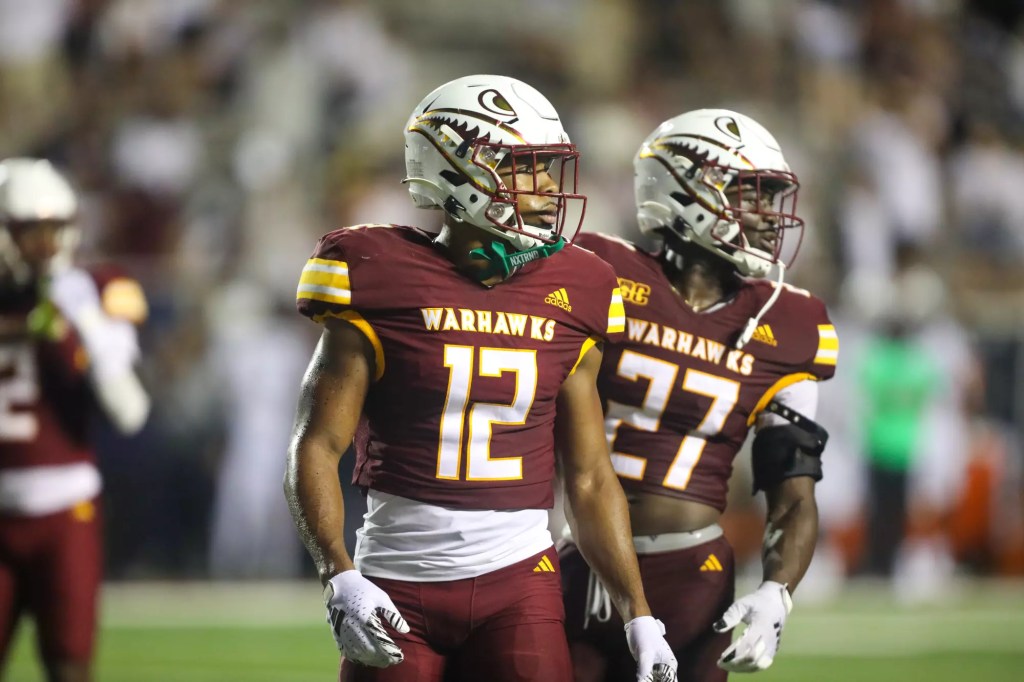
The 2012 Louisiana–Monroe Warhawks football season marked a historic turning point for the program, as they achieved their first winning record in the NCAA Division I Football Bowl Subdivision (FBS) since transitioning to the division in 1994. Under the leadership of third-year head coach Todd Berry, the Warhawks finished the season with an 8–5 record, secured a landmark victory over the eighth-ranked Arkansas Razorbacks, and earned their first-ever FBS bowl game appearance. This season, defined by resilience, strategic play, and a breakout performance from quarterback Kolton Browning, showcased ULM’s ability to compete against top-tier programs and solidified their place in Sun Belt Conference history.
A Breakthrough Start: Upsetting Arkansas
The Warhawks opened the 2012 season with a stunning upset, defeating the No. 8 Arkansas Razorbacks 34–31 in overtime on September 8 at War Memorial Stadium in Little Rock. Entering as 30.5-point underdogs, ULM faced an Arkansas team coming off a 21–5 record over the previous two seasons and favored to contend for the Southeastern Conference (SEC) and national championships. The Razorbacks were hampered by injuries to three starters, including quarterback Tyler Wilson, but ULM’s performance was nothing short of remarkable.
Trailing 28–7 midway through the third quarter, the Warhawks mounted a comeback led by quarterback Kolton Browning, a second-team All-Sun Belt selection from the previous year. Browning, who had struggled in a prior start against Arkansas in 2010 (completing 7 of 17 passes for 74 yards in a 31–7 loss), was dynamic in his return. He completed 42 of 67 passes for 412 yards and three touchdowns, while adding 69 rushing yards on 16 carries. His clutch performance included a 23-yard touchdown pass to Brent Leonard on fourth-and-10 with 55 seconds left in regulation, tying the game at 28–28. In overtime, facing a fourth-and-1, ULM boldly pursued a first down rather than settling for a field goal, with Browning’s 16-yard touchdown run sealing the 34–31 victory. Leonard contributed 11 catches for 112 yards, and the Warhawks outgained Arkansas 550–377 in total yards.
This win marked ULM’s first over a ranked opponent since joining the FBS, their fourth victory against an SEC team (following wins over Mississippi State in 1995 and Alabama in 2007), and the Sun Belt Conference’s first triumph over a top-10 team. “It’s a great feeling; we feel like we deserve it,” Browning said. “We believed the whole time, and we’ve believed for two years that we could put something like this together.” The victory sent shockwaves through college football, highlighting ULM’s potential under Berry’s leadership.
A Competitive Stretch Against Powerhouses
Following the Arkansas upset, ULM faced another SEC challenge, traveling to Auburn on September 15. The Warhawks nearly pulled off another stunner, taking the Tigers to overtime before falling 31–28. A win would have made ULM the second non-SEC team in NCAA history to defeat SEC opponents in back-to-back weeks. The game showcased ULM’s ability to hang with elite programs, as they outplayed Auburn for much of the contest.
The next week, on September 21, ULM hosted Baylor in their first-ever meeting, played before a record crowd of 31,175 at Malone Stadium in Monroe, Louisiana. The nationally televised Friday night ESPN game saw ULM compete fiercely but lose a high-scoring affair, 47–42, to a Baylor team led by quarterback Robert Griffin III’s successor, Nick Florence. Despite the loss, ULM’s offense continued to shine, with Browning and the team amassing significant yardage in a game that underscored their growing confidence.
A Strong Sun Belt Campaign
After the challenging non-conference slate, ULM entered Sun Belt Conference play with momentum. They reeled off five consecutive victories against Tulane (63–10), Middle Tennessee (31–17), Florida Atlantic (35–14), Western Kentucky (43–42 in overtime), and South Alabama (38–24). These wins showcased the Warhawks’ offensive firepower and defensive resilience, with Browning’s dual-threat ability and a balanced attack led by receivers like Brent Leonard and running back Jyruss Edwards. The streak propelled ULM to a 6–2 record, their best start since the 1987 Division I-AA national championship season.
However, the Warhawks stumbled in their next two games, losing to Arkansas State (42–23) and Louisiana-Lafayette (40–24) in the annual Battle on the Bayou rivalry. These setbacks tested the team’s resolve, but ULM rebounded with a 23–17 victory over North Texas, improving to 7–4. They closed the regular season with a dramatic 23–17 overtime win against Florida International (FIU), securing an 8–4 record and their first winning season in FBS history. The 6–2 Sun Belt record tied ULM for second place in the conference, a significant achievement for a program that had gone 4–8 in 2011 and 9–15 over Berry’s first two seasons.
Historic Bowl Appearance
The Warhawks’ 8–4 regular season earned them an invitation to the 2012 AdvoCare V100 Independence Bowl in Shreveport, Louisiana, their first-ever FBS bowl appearance. Facing the Ohio Bobcats on December 28, ULM struggled to maintain their regular-season momentum, falling 45–14. Despite the loss, the bowl berth was a milestone for a program that had endured a 13-year bowl drought, the longest among FBS teams at the time. The 8–5 final record capped a season that exceeded expectations and elevated ULM’s profile nationally.
Key Players and Coaching Impact
Kolton Browning was the heart of the 2012 Warhawks, earning Sun Belt All-Conference honors for his leadership and versatility. His 481 total yards against Arkansas remain a program highlight, and his ability to evade pressure and find open receivers defined ULM’s up-tempo offense. Brent Leonard, the team’s leading receiver, provided a reliable target, while the defense, led by players like DaCorris Ford and R.J. Young, made critical stops in key moments, particularly in the Arkansas upset.
Head coach Todd Berry, hired in 2010, was instrumental in the turnaround. After a 9–15 record in his first two seasons, Berry’s emphasis on discipline, aggressive play-calling, and belief in his players transformed ULM into a competitive force. “The only way that this becomes real is if we play well again next week against a really good Auburn team,” Berry said after the Arkansas win, reflecting his focus on sustained success. His leadership earned him recognition as the Sun Belt Coach of the Year, and he remains the only ULM coach to lead the program to a winning FBS season.
Legacy of the 2012 Season
The 2012 season was a watershed moment for Louisiana–Monroe, proving that a small Sun Belt program could challenge college football’s elite. The Arkansas victory, in particular, resonated as one of the biggest upsets of the year, with fans and analysts alike noting its impact. One Arkansas fan on X recalled the game as “absolutely painful” and “the end of an era” for the Razorbacks, who fell from national title contention after the loss. The Warhawks’ 8–5 record, bowl appearance, and competitive showings against Auburn and Baylor demonstrated their potential to compete with Power 5 programs.
The season also had lasting effects on the program’s identity. Played at JPS Field at Malone Stadium, named after legendary coach James L. Malone, the 2012 campaign honored ULM’s rich history, which includes a 1987 Division I-AA national championship led by Stan Humphries. The Warhawks’ ability to secure five conference titles (three outright, two shared) and produce NFL talent like Humphries, Bubby Brister, and Doug Pederson underscores their tradition of excellence, with 2012 adding a new chapter.
Despite falling short in the Independence Bowl, the 2012 Louisiana–Monroe Warhawks left an indelible mark on college football. Their first FBS winning season, historic upset over Arkansas, and fearless approach against top competition showcased a program on the rise. For a university with a proud football legacy dating back to 1931, the 2012 season remains a defining moment, celebrated by fans and remembered as the year the Warhawks soared.



Leave a comment